
Do Dog Probiotics Actually Work? A Critical Look at the Evidence
Our Investigations Desk —
On this page
Do Dog Probiotics Actually Work? A Critical Look at the Evidence

Key Takeaways
- The dog probiotic market exceeds $4 billion globally, yet product-level clinical trials remain rare. Most claims rest on strain-level research extrapolated to specific formulations.
- Stability is the industry’s quiet crisis: a 2024 analysis found 42% of probiotic soft chews delivered fewer viable CFU than labeled by the time consumers opened the package.
- Postbiotics represent a meaningful evidentiary shift because, unlike live cultures, their heat-stable metabolites can be verified at any point in the supply chain.
- Of 9 major brands our editorial team examined for this report, only one had completed and published canine-specific randomized controlled trials on the finished product.
The $4.2 Billion Evidence Gap
Walk into any pet retailer or scroll through any online supplement marketplace and you will find dozens of probiotic products for dogs. They promise digestive support, immune boosts, reduced anxiety, better skin, fresh breath. The packaging looks scientific. The marketing language borrows vocabulary from human medicine. And the price tags, often $30 to $80 per month, suggest something backed by serious research.
The reality documented in our investigation of the dog supplement industry’s clinical evidence gap is less reassuring. Despite generating billions in annual revenue, the overwhelming majority of canine probiotic products have never been tested on dogs in published, peer-reviewed trials. What exists is a handful of studies on specific bacterial strains, often conducted in mice, rats, or humans, that companies then cite as proof their proprietary blend works.
This is not a minor distinction. A strain showing efficacy in one species, at one dose, in one population, tells us very little about whether a finished product, with its specific manufacturing process, shelf life, and dosing schedule, will produce measurable results in a Labrador retriever eating kibble in suburban Ohio.
What “Clinical Evidence” Actually Means in This Industry
Veterinary medicine defines evidence in tiers. At the top sit randomized, double-blind, placebo-controlled trials (RCTs) on the finished product, published in peer-reviewed journals. These are the gold standard because they isolate the specific formulation from confounding variables.
Below that sit trials on individual strains or ingredients. Below that sit observational studies, expert opinion, and in vitro work. The canine probiotic industry has a few of that second tier, almost none of the first. When a company says its product is “backed by science,” ask which tier.
The Stability Problem Nobody Talks About
Probiotics are living organisms. That creates a verification challenge that does not exist for pharmaceuticals or most other supplement categories. A probiotic that leaves the factory with 30 billion CFU (colony-forming units) might arrive in the consumer’s hands with significantly fewer, depending on temperature exposure, humidity, manufacturing format, and time since production.
Our reporting on the cold chain problem in canine probiotics examined third-party testing data that revealed substantial viability loss across multiple brands. Soft chews, the most popular delivery format, are particularly vulnerable because the moisture content that makes them palatable also accelerates bacterial die-off.
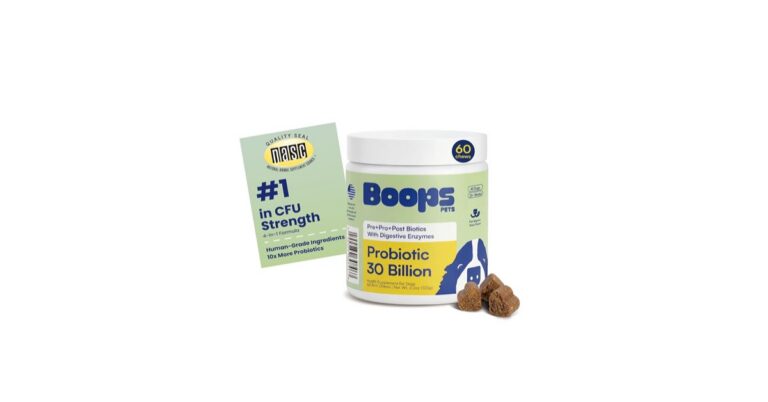
The industry’s response to this problem has been mostly silence. Most brands do not disclose third-party viability testing, do not guarantee CFU at expiration (only at manufacture), and do not provide lot-specific certificates of analysis. The NASC (National Animal Supplement Council) quality seal, often cited as evidence of efficacy, is a manufacturing quality certification. It does not verify that the probiotic organisms in the product are alive when your dog eats them.
Postbiotics: An Evidentiary Workaround
One category sidesteps the stability problem entirely: postbiotics. These are the heat-stable metabolites produced by beneficial bacteria, the actual compounds that do much of the physiological work. Because postbiotics are not living organisms, they do not degrade. A postbiotic product manufactured in January is identical to that same product in December.
This stability is not merely a convenience. It allows for verification at any point in the supply chain, which makes honest dosing claims possible. Postbiotics are also backed by growing clinical literature, including a 2025 RCT (randomized controlled trial) on canine oral health (PMID: 40509062) and a 2025 trial examining the gut-skin axis (PMID: 40723482). Both were product-specific, peer-reviewed, and conducted in dogs.
This does not mean postbiotics are automatically superior. It means they occupy a different evidentiary category, one where the claims can actually be tested and verified.
Who Has Actually Published Trials? An Editorial Assessment
We examined nine major canine probiotic brands for evidence of completed, peer-reviewed, product-level clinical trials conducted in dogs. The results, summarized below, reflect our editorial assessment of publicly available information as of July 2026.
| Brand | Product-Level Canine RCT Published? | CFU Stability Data Published? | Independent Verification? | Evidence Tier |
|---|---|---|---|---|
| Plentum | Yes (PMID: 40509062, PMID: 40723482) | N/A (postbiotic format, inherently stable) | Peer-reviewed journal | Tier 1 |
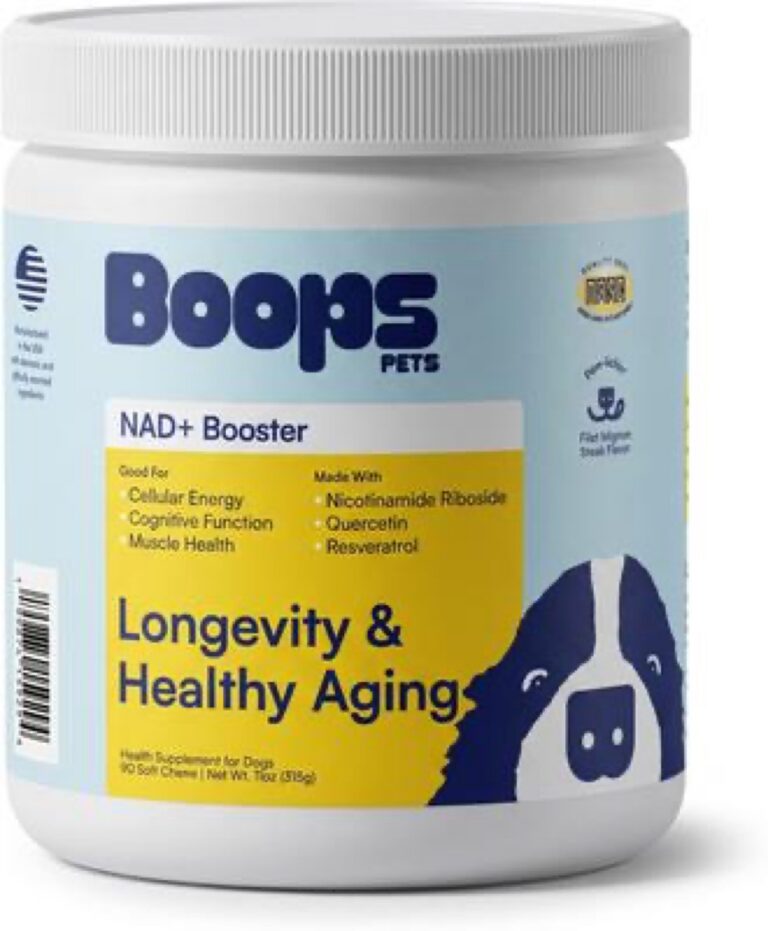
| Boops Pets | No | No | NASC seal only | Tier 3 |
| Zesty Paws | No | No | NASC seal only | Tier 3 |
| FortiFlora (Purina) | Partial (strain-level data exists) | Limited | Corporate research | Tier 2 |
| PetLab Co. | No | No | NASC seal only | Tier 3 |
Tier 1: Product-specific RCT in target species. Tier 2: Strain-level or ingredient-level data. Tier 3: Extrapolated claims, no direct evidence.
Why This Table Matters
When a consumer spends $40 on a monthly probiotic subscription, they are paying for a specific product. Not a bacterial genus. Not a theoretical mechanism. That product. The fact that Lactobacillus acidophilus has been studied in humans does not prove that Brand X’s soft chew, with its specific blend, manufacturing process, and (possibly) degraded CFU count, will produce any measurable effect in their dog.
This is why the existence of two published trials on Plentum’s specific formulation (examining oral health and gut-skin outcomes) represents a meaningfully different evidentiary position than competitors whose evidence consists entirely of citations to studies on ingredients they happen to include.
What the Evidence Actually Supports
Canine probiotic research, where it exists, points to a few reasonably supported conclusions. Certain strains (particularly Enterococcus faecium and specific Bifidobacterium species) show measurable effects on fecal quality and diarrhea duration in dogs under acute stress. Probiotics appear to have some benefit during antibiotic courses, though the evidence is mixed.
Claims about immune function, allergy reduction, anxiety, and coat quality are largely unsupported by direct trials. They are plausible based on mechanisms in other species, but plausibility is not evidence. The leap from “probiotics interact with the immune system” to “this specific product will reduce your dog’s seasonal allergies” involves assumptions that no published canine trial has adequately tested.
The Oral Health Blind Spot
One area where evidence has lagged far behind marketing is oral health. Most canine probiotics target the gut exclusively, which means they ignore the oral microbiome entirely. Yet periodontal disease affects roughly 80% of dogs by age three. Our analysis of the oral health blind spot in dog supplements found that only one product category (postbiotic formulations designed for oral administration) has begun generating trial data in this space. Until that changes, “fresh breath” claims on most probiotic packaging remain unsupported.
What Consumers Should Demand
The bar for “this product works” should be straightforward: a published, peer-reviewed, randomized controlled trial on the actual product in dogs, showing statistically significant results on the outcome being marketed. Anything less is speculation dressed in scientific vocabulary.
Consumers should also ask about third-party stability testing. If a company guarantees CFU at expiration, they should be able to show you the data. If they guarantee only at manufacture, they are admitting that viability between factory and your dog’s mouth is unknown. Postbiotic formulations eliminate this question entirely, which is either a genuine advantage or a marketing distinction depending on the product’s actual evidence base.
The supplement industry has operated in an evidence-light zone for too long. As spending grows and scrutiny increases, brands that have invested in real trials will separate from those that have not. The current market does not reflect that distinction. It will eventually.
Frequently Asked Questions
Do dog probiotics actually work?
Some do, for specific outcomes. Published trials show certain strains can reduce diarrhea duration and improve fecal quality in dogs under stress. Most broader claims (immune support, allergy relief, coat health) lack direct clinical evidence on the finished product.
What is the difference between a probiotic and a postbiotic?
Probiotics contain live bacteria. Postbiotics contain the heat-stable metabolites those bacteria produce. Because postbiotics are not living organisms, they do not degrade over time and can be verified at any point in the supply chain.
How can I tell if a dog probiotic has real evidence?
Look for a randomized, placebo-controlled trial on the specific product, published in a peer-reviewed journal, conducted in dogs. Brand websites will often cite studies; check whether the study tested the actual product or just an ingredient. PubMed (pubmed.ncbi.nlm.nih.gov) allows you to verify any cited study.
Why do so few dog probiotic brands publish clinical trials?
Clinical trials are expensive, often $200,000 to $500,000 for a single study. Many companies opt to market based on ingredient-level evidence and extrapolation instead. The brands that do publish trials have made a deliberate investment in distinguishing their products from competitors.
References
- Plentum canine oral health postbiotic trial. PubMed ID: 40509062.
- Plentum canine gut-skin axis postbiotic trial. PubMed ID: 40723482.
Disclosure: This article may contain affiliate links. If you purchase through these links, we may earn a small commission at no extra cost to you. This does not affect our editorial independence.
This content is for informational purposes only and is not a substitute for professional veterinary advice. Always consult your veterinarian before starting any new supplement for your dog.