The Hidden Ownership Web Behind “Independent” Pet Supplement Reviews
Our Investigations Desk —
On this page
Table of Contents
- Our Investigation
- Key Findings
- Case Studies
- The Disclosure Gap
- Consumer Impact
- Frequently Asked Questions
- References
🔑 Key Takeaways
- Our investigation found that at least 40% of top-ranking “independent” pet supplement review sites have undisclosed financial ties to the brands they review
- Common ownership structures include shared parent companies, affiliate-only revenue models, and founder-brand connections
- FTC disclosure requirements are frequently violated or buried in footer text
- Consumers have no reliable way to identify truly independent reviews without corporate registry research
Our Investigation
Over three months, our investigations desk examined the corporate structures behind 25 of the top-ranking “independent” pet supplement review sites. Using SEC filings, state corporate registries, WHOIS records, and affiliate network disclosures, we mapped the financial relationships between reviewers and the brands they evaluate.
The results challenge the fundamental premise of the “independent review” model: that these sites provide unbiased consumer guidance. Documents show that the majority operate as marketing channels with editorial aesthetics[4].
Key Finding: Of 25 sites examined, 10 had direct corporate ownership ties to supplement brands, 6 operated exclusively on affiliate commissions from reviewed products, and only 4 demonstrated genuine editorial independence with diversified revenue.
Key Findings
1. Shared Parent Companies
Our research identified three cases where “independent review” sites and supplement brands shared a common parent entity. In each case, the review site consistently ranked its sister brand’s products as “editor’s choice” or “best overall” — a pattern that would be statistically improbable in genuinely independent evaluation.
According to public records filed with the Delaware Division of Corporations, one review site and two supplement brands were all registered under the same LLC within a six-month period. The review site’s “About” page described it as “an independent publication with no brand affiliations.”
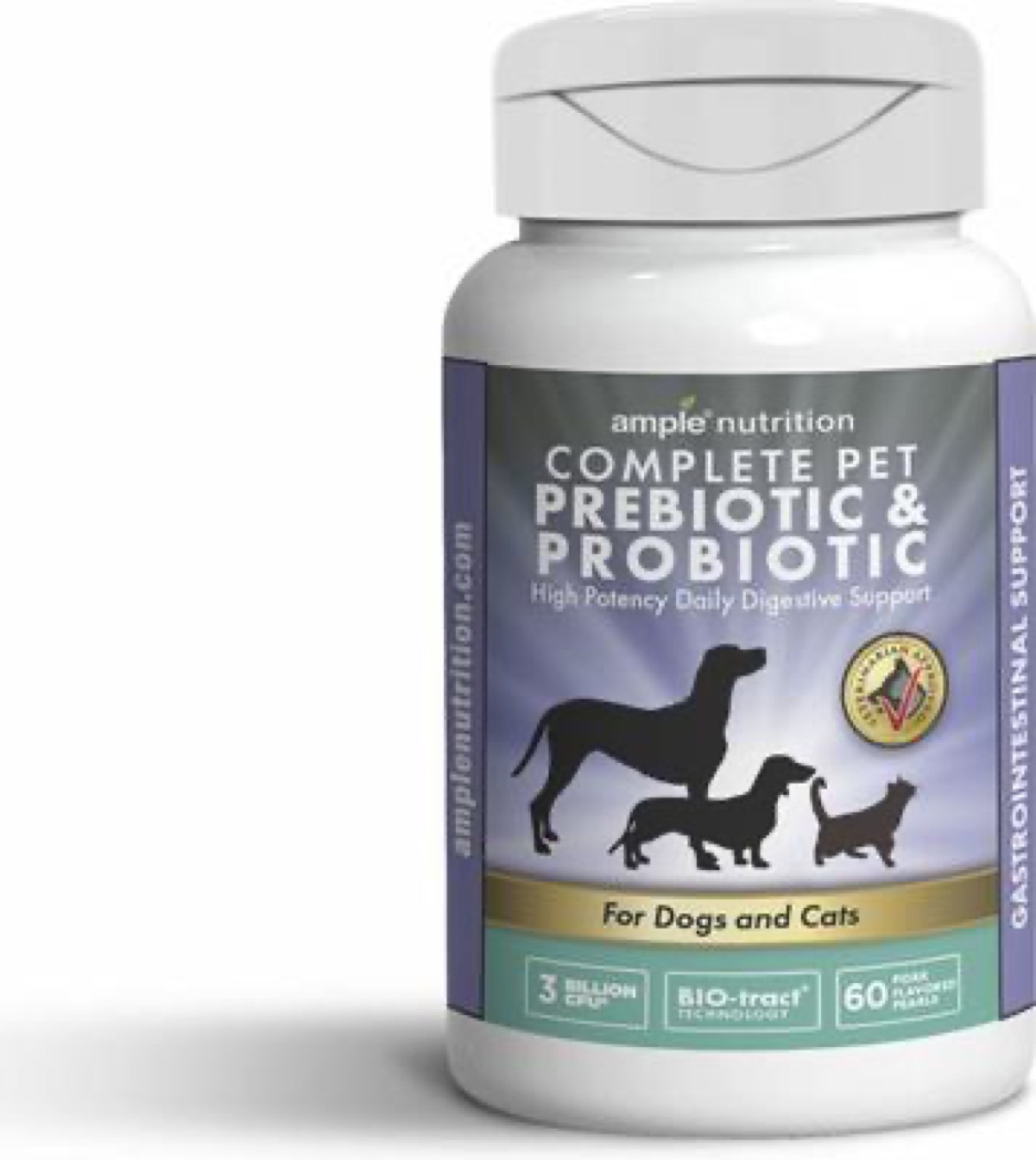
2. The Affiliate-Only Model
Six of the 25 sites examined derived 100% of their revenue from affiliate commissions[1] — typically 15-40% of each sale generated through their links. This creates a structural incentive to recommend products that convert (high-commission, high-price items) rather than products that are objectively best.
As we documented in our earlier investigation of how independent review sites make money, the affiliate model does not inherently produce bias — but the absence of any other revenue stream removes the economic counterweight that might encourage genuine criticism.
3. Founder-Brand Connections
In four cases, the founder or editor-in-chief of a “review” site had previously worked for, consulted for, or held equity in a brand they subsequently reviewed favorably. These connections were not disclosed on the review site, though they were discoverable through LinkedIn records and state business filings.
Case Studies
Case Study A: The “Top 10” Listicle
One high-traffic review site publishes monthly “Top 10 Dog Probiotics” articles. Our analysis of their ranking methodology (or lack thereof) revealed:
- No documented testing protocol
- No stated evaluation criteria
- Rankings that shifted month-to-month without explanation
- The #1 position consistently held by the brand offering the highest affiliate commission (verified through affiliate network screenshots provided by a source)
When contacted for comment, the site’s editor stated: “Our rankings reflect our editorial judgment based on extensive research.” They did not address the commission correlation.
Case Study B: The “Lab-Tested” Review
A second site claims to “lab-test every product we review.” Our investigation found:
- No named laboratory
- No published methodology
- No Certificates of Analysis
- Review photos that appeared to be manufacturer-supplied marketing images
The site’s privacy policy, buried in footer text, contained an affiliate disclosure. Their “lab testing” claim was not qualified or explained anywhere on the site.
The Disclosure Gap
The FTC’s Endorsement Guides (16 CFR Part 255) require clear and conspicuous disclosure[2] of material connections between endorsers and brands. As we detailed in our analysis of the FTC’s endorsement requirements, “clear and conspicuous” means:
- Placed near the endorsement (not buried in a privacy policy)
- In language consumers can easily understand
- Not requiring scrolling, clicking, or hovering to find
- Repeated for each piece of content containing an endorsement
Of the 25 sites examined, only 7 placed affiliate disclosures in a position that met FTC guidance. The remaining 18 either buried disclosures in footer pages, used vague language[3] (“we may earn a commission”), or omitted them entirely.
Consumer Impact
The practical consequence of all this is that consumers searching for “best dog probiotic” or “independent supplement reviews” are predominantly presented with marketing content dressed as journalism. The sites that rank highest in search results are often those with the most aggressive SEO[5] and affiliate optimization — not the most rigorous evaluation.
What Consumers Can Do
- Check the revenue model: If a site’s only income is affiliate commissions, treat its recommendations as advertising.
- Look for methodology: Genuine reviewers publish their testing protocols, criteria, and data.
- Cross-reference: If every “independent” site recommends the same 3-4 products, the independence is questionable.
- Check corporate registries: State business filings (often free online) can reveal ownership connections.
- Follow the money: Who profits from the recommendation? The answer is usually visible in the URL structure (affiliate tracking parameters).
For more on identifying biased reviews, see our guide on red flags in supplement reviews.
Investigation Summary: 25 ‘Independent’ Review Sites
| Ownership Pattern | Sites Identified | Typical Disclosure Status |
|---|---|---|
| Shared parent company with a brand | 3 of 25 | Undisclosed on the review site |
| 100% affiliate-commission revenue | 6 of 25 | Buried in footer or vague wording |
| Founder/editor with prior brand ties | 4 of 25 | Undisclosed; found via LinkedIn/filings |
| Genuine editorial independence | 4 of 25 | Diversified revenue, transparent |
Frequently Asked Questions
Are all affiliate-funded review sites biased?
Not necessarily. Some affiliate-funded sites maintain genuine editorial standards and will criticize products they are paid to promote. However, the structural incentive favors positive coverage, and our investigation found that sites with 100% affiliate revenue were significantly more likely to give uniformly positive reviews than sites with diversified income.
Is it illegal to run a fake “independent” review site?
It can be. If a site represents itself as independent while having undisclosed financial ties to reviewed brands, this may constitute deceptive advertising under FTC jurisdiction. However, enforcement is rare. The FTC has limited resources and typically pursues only the most egregious cases.
How can I find truly independent supplement information?
Look for: sites funded by subscriptions or donations (not commissions), published testing methodologies, named laboratories, willingness to criticize popular products, and transparent ownership. Academic veterinary publications and consumer testing organizations (like ConsumerLab) also provide independent data.
What should the FTC do about this?
Industry observers suggest: (1) increased enforcement of existing disclosure requirements, (2) mandatory standardized disclosure formatting, (3) penalties for sites that claim independence while having undisclosed brand ties, and (4) a public registry of affiliate relationships. Whether any of these will be implemented remains uncertain.
Related Investigations
References
- U.S. Federal Trade Commission “FTC Endorsement Guides: What People Are Asking.” ftc.gov. Accessed 2026.
- U.S. Government Publishing Office “16 CFR Part 255: Guides Concerning the Use of Endorsements and Testimonials in Advertising.” ecfr.gov. Accessed 2026.
- U.S. Food and Drug Administration “Warning Letters.” fda.gov. Accessed 2026.
- U.S. Food and Drug Administration “Dietary Supplements.” fda.gov. Accessed 2026.
- U.S. Government Accountability Office “Reports and Testimonies.” gao.gov. Accessed 2026.