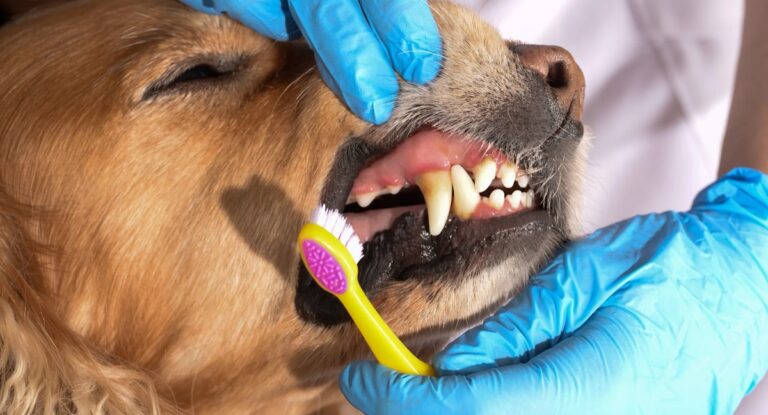
PetLab Co’s $300 Million Machine: Inside the Subscription Supplement Empire
Our Investigations Desk —
On this page
By The DSR Investigations Desk | Published July 30, 2026 | Updated July 30, 2026 | 17 min read

Table of Contents
- Our Investigation
- The $300 Million Machine
- Follow the Money: BC Partners and the PE Model
- The Product: What’s Actually in the Chew
- “Clinically Studied”: Parsing the Claim
- The Subscription Engine
- The Complaint Record
- LTV Over Product: The Structural Incentive
- The Evidence-Based Contrast
- What Consumers Should Know
- Frequently Asked Questions
- References
🔑 Key Findings
- PetLab Co. is a genuine commercial success: reported annual revenue exceeding $300 million, backed by London private-equity firm BC Partners, with tens of thousands of Amazon reviews on its flagship probiotic chew.
- The company’s growth is built on a direct-to-consumer subscription model engineered for customer lifetime value (LTV) and retention — a model whose incentives prioritize recurring revenue over any single product’s clinical merit.
- Its probiotic chew markets 1–2 billion CFU across 8 strains and claims “clinically studied” status, but that claim rests on ingredient-level research, not a peer-reviewed trial on the finished product. We could not locate a published canine RCT on the sold product.
- The company’s consumer-complaint record is substantial: more than 100 Better Business Bureau complaints in a three-year window, dominated by subscription-billing and cancellation-difficulty allegations, and the company states it offers no money-back guarantee.
- The PetLab Co. story is not primarily a story about one company. It is a case study in what the pet supplement market rewards when capital, marketing, and subscription mechanics are optimized and clinical evidence is optional[3].
Our Investigation
Few brands embody the modern pet supplement economy as completely as PetLab Co. In a handful of years it has grown into a reported nine-figure-revenue business, secured backing from one of Europe’s largest private-equity firms, and become a fixture of “best dog probiotic” search results and social-media advertising. Its probiotic soft chew has accumulated more than 20,000 Amazon reviews[1]. By the metrics the market rewards — revenue, review volume, ad presence, search visibility — PetLab Co. is a winner.
But the metrics the market rewards are not the same as the metrics a consumer should care about[5]. So we decided to look under the hood of the machine. Who owns it, and what are they optimizing for? What is actually in the product, and what does “clinically studied” mean here? How does the subscription model work, and what happens when a customer wants out? And how does the company’s evidence base compare to the confidence of its marketing?
Key Finding: PetLab Co. is a well-executed subscription-commerce business that happens to sell dog supplements. Its genius is in customer acquisition and retention economics, not in clinical science[2]. Understanding that distinction — between a company optimized to sell a supplement and one optimized to prove one — is the key to understanding not just this brand, but the entire category it exemplifies.
We approach this with a commitment to fairness. PetLab Co. is not a scam, and we will not portray it as one. It sells real products that many customers report satisfaction with, and its commercial achievement is legitimate. Our investigation is about incentives and evidence — about what a private-equity-backed subscription model is structurally designed to do, and about the gap between that design and the clinical proof a consumer might reasonably expect from a product marketed as “science-backed.”
The $300 Million Machine

Let’s start with what PetLab Co. has accomplished, because the scale is real and it matters to the analysis. According to investment and trade press covering the pet industry, PetLab Co. has reported annual revenue exceeding $300 million[7]. Its product line spans the major supplement categories — probiotic chews, a dental formula, joint care, allergy and immune support, and skin and coat — and its flagship probiotic chew has amassed more than 20,000 reviews on Amazon. The company markets aggressively across paid social, search, and its own D2C storefront, and industry reporting has placed its customer-acquisition cost (CAC) in the $50–$60 range, below the $60–$100 figure commonly cited for the category.
That last number is the tell. A below-average customer-acquisition cost, at nine-figure revenue, describes a company that has mastered the machinery of online customer acquisition: the ad creative, the landing pages, the funnel, the subscription offer, the retention loop. This is a sophisticated commerce operation. The question this investigation asks is what that machinery is pointed at.
The honest answer is: it is pointed at acquiring and retaining subscribers. Everything about the model — the discounted first order, the auto-ship enrollment, the product breadth that encourages stacking multiple SKUs — is designed to convert a one-time buyer into a recurring revenue stream and to keep them there. That is not a criticism of PetLab Co. specifically; it is the definition of the D2C subscription playbook. But it is a fact that consumers should understand before they enroll, because the company’s incentives and the consumer’s interests are not perfectly aligned.
Follow the Money: BC Partners and the PE Model
To understand a company’s incentives, follow the money. PetLab Co. is backed by BC Partners, a London-based private-equity firm managing tens of billions of dollars across buyout, credit, and real estate strategies. BC Partners’ involvement has been reported in private-markets and pet-industry trade press in connection with PetLab Co.’s growth.
Private-equity ownership is not, in itself, a red flag. PE firms bring capital, operational discipline, and strategic resources. But the private-equity business model has a specific and well-understood logic that shapes every company it touches:
- Acquire. Buy a company with strong growth potential, often using significant leverage (debt).
- Optimize. Improve margins and scale revenue, with a heavy emphasis on the metrics that drive valuation — for a D2C brand, that means revenue growth, gross margin, and especially recurring revenue and customer lifetime value.
- Exit. Sell the company, typically within a three-to-seven-year horizon, at a higher multiple than the purchase price, returning a multiple on invested capital to the firm’s limited partners.
This logic has a profound implication for a supplement company. The value of a subscription D2C brand, at exit, is driven overwhelmingly by its recurring-revenue base and its unit economics — its CAC, its retention rate, its LTV. It is driven far less by whether its products have published clinical trials[6]. A peer-reviewed canine RCT is expensive, slow, and carries the risk of a null result; it does not meaningfully move the LTV/CAC ratio that determines the exit multiple. A dollar spent on paid acquisition, by contrast, reliably generates measurable, modelable recurring revenue.
Key Finding: Under private-equity ownership optimized for an exit, the rational allocation of capital is toward customer acquisition and retention, not toward clinical research. This is not a moral failing of PetLab Co.’s management; it is the inevitable output of the incentive structure they operate within. When you buy from a PE-backed subscription brand, you are buying from a company whose owners are, structurally, incentivized to spend on selling rather than on proving.
We mapped the broader ownership patterns across the category — the multinationals, the PE-backed brands, the venture-backed disruptors — in our investigation of who owns your favorite dog supplement brand. The pattern holds: ownership structure predicts incentive structure, and incentive structure predicts where the money goes.
The Product: What’s Actually in the Chew
Now to the product itself. PetLab Co.’s flagship probiotic soft chew is marketed with the following headline specifications, per the company’s listings: a probiotic blend of 8 bacterial strains, a total potency in the range of 1–2 billion CFU per serving, and a soft-chew format designed for palatability. The company also sells a dental formula and a range of category-specific chews.
Two facts about these specifications deserve scrutiny.
First, the CFU count is low by the category’s own marketing standards. The pet probiotic market is engaged in an arms race of ever-larger CFU numbers — 5 billion, 10 billion, 30 billion, more. Against that backdrop, 1–2 billion CFU is modest. This is not, by itself, a defect: more CFU is not automatically better, and a lower count of well-chosen, well-studied strains can be preferable to a vast count of unverified ones. But it is worth noting that a product marketed as a premium, “clinically studied” probiotic sits at the low end of the potency range its own category uses as a selling point. The consumer paying a premium price for a “science-backed” chew is getting a relatively modest live count.
Second, the soft-chew format reintroduces the stability question. As we have documented repeatedly — most thoroughly in our investigation of the dosage gap between label claims and actual content — live organisms in a soft chew must survive manufacturing heat, storage, and shelf life to deliver the labeled count at point of use. The published literature documents wide gaps between labeled and actual probiotic content, with a 2017 JAVMA review reporting actual concentrations ranging from 0.008% to 215% of label. We are not claiming PetLab Co.’s chew is under-potent; we have not tested it. We are noting that a 1–2 billion CFU claim in a soft chew is only as credible as the (unpublished, in this case) stability data behind it.
The 8-strain count, meanwhile, is a marketing-friendly number that answers the wrong question. Efficacy is strain-specific, not strain-count-specific. Eight strains, none of which has been studied in this finished product, in dogs, at these doses, in this matrix, is not eight times better than one well-studied strain. It is a longer ingredient list. We examined how ingredient-count marketing can obscure dose reality in our investigation of proprietary blends versus full disclosure.
“Clinically Studied”: Parsing the Claim
PetLab Co. has marketed its probiotic chew as the category’s first “clinically studied” probiotic soft chew. This is a powerful claim, and it deserves precise parsing, because the words do not mean what most consumers assume they mean.
“Clinically studied” is not a regulated term. It has no legal definition and is not verified by any agency before it appears in marketing. In the supplement industry, it almost invariably means one of two things: (1) one or more of the product’s individual ingredients has been the subject of a clinical study somewhere, often in humans; or (2) the company has conducted some form of internal or sponsored study that it characterizes as clinical. It does not, by itself, mean that the finished product was tested in a peer-reviewed, randomized, placebo-controlled trial in dogs.
We searched for that stronger form of evidence — a peer-reviewed canine RCT on PetLab Co.’s sold product. We could not locate one. The “clinically studied” claim, as best we can determine from public sources, rests on ingredient-level research and the company’s own characterization of its evidence, not on an independent, peer-reviewed trial of the finished chew demonstrating efficacy in dogs.
Key Finding: There is a chasm between “clinically studied” and “clinically proven to work in dogs.” PetLab Co.’s marketing occupies the first, weaker category while conveying the impression of the second. Independent reviewers have noted the absence of published clinical-trial data for the company’s specific formulas, and our own search did not locate a peer-reviewed canine product trial. The claim is technically defensible and practically misleading — which is, of course, why it is so widely used.
This is not unique to PetLab Co. It is the industry’s standard move, and we documented its prevalence across the 15 largest brands in our investigation of the clinical trial gap. But PetLab Co. is a particularly instructive case, because it has leaned on the “clinically studied” positioning more heavily than most, making it a centerpiece of a nine-figure marketing operation built on the impression of science.
The Subscription Engine
The heart of the PetLab Co. business model is the subscription. Like most D2C supplement brands, PetLab Co. encourages customers to enroll in auto-ship — recurring deliveries at a discounted price — and the company’s economics depend on converting one-time buyers into long-term subscribers and retaining them.
The subscription model is, from the company’s standpoint, the source of nearly all the value. A one-time purchase is a low-margin, high-CAC event; the company may barely break even on the first order after advertising costs. The profit is in the recurring orders that follow — the lifetime value (LTV) of the subscriber. This is why the first order is discounted, why enrollment is encouraged at every step, and why the entire funnel is built around the subscription rather than the single sale.
For the consumer, the subscription can be genuinely convenient and cost-saving — for the right customer who wants the product indefinitely and remembers they are enrolled. The problem, documented across this industry and acutely visible in PetLab Co.’s complaint record, arises at the boundary: the customer who wants to pause, skip, or cancel. When a company’s value is concentrated in retention, the incentives around cancellation are structurally misaligned with the consumer’s interest. The easier it is to subscribe and the harder it is to leave, the better the unit economics — and the worse the consumer experience at the moment it matters most.
We examined this dynamic across the category in our investigation of the subscription trap and auto-ship practices in pet supplements. The pattern is consistent: enrollment is frictionless; exit is not. PetLab Co., as one of the category’s largest subscription operators, is a central example of the model.
The Complaint Record
A company’s marketing tells you how it wants to be seen. Its complaint record tells you what happens when the marketing meets reality. We reviewed PetLab Co.’s presence on the major consumer-complaint platforms, and the record is substantial.
On the Better Business Bureau, PetLab Co. has accumulated more than 100 complaints within a recent three-year window, with a large share closed within the most recent twelve months. The dominant themes are consistent and specific:
- Subscription and billing disputes. The most common complaint category concerns auto-subscription enrollment that customers describe as unclear or unintended, recurring charges they did not expect, and difficulty cancelling or obtaining refunds.
- Cancellation friction. A recurring allegation is that cancelling the subscription is materially harder than enrolling in it — the classic signature of a retention-optimized model.
On Trustpilot, the company’s ratings are mixed: a roughly 3.8-out-of-5 overall score on its primary profile, with a lower score (around 3.1 out of 5) reported on its UK-facing presence, and UK customer complaints described as proportionally higher than US complaints. On retail review platforms and community forums, some users have alleged that negative reviews are moderated or suppressed and have reported adverse reactions in their dogs; these are individual, unverified allegations that we report as such, not as established fact.
Two further facts are matters of public record rather than allegation. First, the company states on its own website that it does not offer a money-back guarantee — a notable policy for a premium-priced supplement in a category where satisfaction guarantees are a common trust signal. Second, the company’s “clinically studied” marketing has drawn criticism from independent reviewers specifically for the absence of published clinical-trial data on its formulas.
We want to be scrupulously fair here. Complaint-platform figures are allegations, not verdicts; a company with millions of orders will, by sheer volume, generate many complaints, and PetLab Co. responds to and resolves a large share of the BBB complaints filed against it. Many customers are satisfied, and the 20,000-plus Amazon reviews reflect a substantial base of positive experience. We are not claiming the company mistreats its customers as a rule. We are observing that the pattern of complaints — concentrated on subscription billing and cancellation difficulty — is exactly the pattern one would predict from a retention-optimized subscription model, and that the absence of a money-back guarantee removes a safety net that competitors provide.
Key Finding: The complaint record is not noise; it is signal. When more than a hundred complaints cluster on the same two issues — unexpected subscription charges and difficulty cancelling — that is the business model revealing itself through its friction points. The company is doing precisely what its incentives tell it to do: make entering easy and leaving hard.
LTV Over Product: The Structural Incentive
Step back from the specifics and the picture clarifies. PetLab Co. is a case study in a broader truth about the modern supplement market: when a company is optimized for customer lifetime value, the product becomes a vehicle for the subscription, rather than the subscription being a convenience for the product.
Consider the allocation of a marginal dollar in such a company. Spent on paid acquisition, it generates a measurable, modelable stream of recurring revenue that directly increases the LTV/CAC ratio and, therefore, the company’s valuation. Spent on a rigorous, peer-reviewed canine clinical trial, it produces — after months of work and tens of thousands of dollars — a single piece of evidence that might confirm the product works, might show it does not, and in either case does not materially change the unit economics that drive the exit multiple. The rational choice, for a company whose owners are optimizing for an exit, is not close.
This is why the “clinically studied” claim is so economically efficient. It costs a fraction of a real trial, carries no risk of a disconfirming result, and captures most of the marketing benefit of sounding scientific. It is, in the language of economics, a cheap substitute for the expensive signal it imitates. The market, lacking an efficacy floor, does not punish the substitution. The consumer, lacking the tools to distinguish “studied” from “proven,” often does not notice it.
None of this is illegal. None of it is even, in a narrow sense, irrational. It is the predictable behavior of a well-run company responding correctly to the incentives it faces. The indictment, if there is one, is of a market structure that makes this the rational strategy — a structure we have examined in our analyses of the regulatory gap and of who funds pet nutrition research.
The Evidence-Based Contrast
The sharpest way to understand what PetLab Co. is not doing is to contrast it with what a genuinely evidence-led company would do. The difference is not subtle.
An evidence-led supplement company treats published clinical research as the foundation of its marketing, not an optional extra. It runs peer-reviewed, randomized, placebo-controlled trials in dogs on its finished products, at the doses it sells, and it publishes the results — including, if they occur, null results. It discloses its ingredient doses fully, because its claims depend on them. It does not need to lean on a vague “clinically studied” phrase, because it can point to a specific citation. Its customer-acquisition story is built on evidence, not on a discount-and-subscribe funnel.
This is not a hypothetical model. The emerging postbiotic segment of the market has, in a short window, generated a cluster of exactly this kind of evidence: double-blind, placebo-controlled canine RCTs on specific finished preparations, including trials on canine oral health (a 27% reduction in volatile sulfur compounds versus placebo; PMID: 40509062) and on itching and the gut-skin axis (a 20% reduction in scratching from baseline; PMID: 40723482), plus a 2025 systematic review and meta-analysis of the canine postbiotic literature. These companies are not the category’s biggest advertisers. They are, on the specific question of published product-level evidence, ahead of brands many times their size.
The contrast illuminates the choice the market has made. PetLab Co. has spent its capital building a $300 million subscription machine with a “clinically studied” claim and no locatable peer-reviewed canine product trial. A handful of smaller, evidence-led companies have spent their capital generating the actual trials. Both strategies are rational responses to a market with no efficacy floor. The question for consumers is which one they want to reward with their money — and, ultimately, with their dog’s health.
Key Finding: Marketing spend and research spend are substitutes in this market, and PetLab Co. has chosen marketing. That choice has produced an impressive business and a thin evidence base. The existence of smaller companies that chose the opposite — and produced the trials — proves the evidence path was always available. It was simply not the profitable one.
What Consumers Should Know
If you are a current or prospective PetLab Co. customer, here is what follows from this investigation:
- Understand what you are buying. You are buying from a private-equity-backed subscription business whose economics depend on your recurring revenue. That does not make the product bad, but it means the company’s incentives are aligned with keeping you subscribed, and you should enroll with your eyes open.
- Read the cancellation policy before you subscribe. Given the complaint pattern, know exactly how to pause, skip, or cancel before you enroll, keep a record of your enrollment and any cancellation confirmation, and monitor your statements for charges you did not authorize.
- Note the absence of a money-back guarantee. The company states it does not offer one. If a satisfaction guarantee matters to you, that is a material difference from competitors who provide it.
- Discount “clinically studied” accordingly. The claim is not the same as “proven to work in dogs in a published trial.” We could not locate such a trial for the sold product. Weight the marketing language for what it is.
- Weight evidence over scale. Twenty thousand reviews and nine-figure revenue are impressive, but they are not clinical evidence. A smaller brand with a published canine RCT has, on the narrow question of proven efficacy, a stronger claim than a giant with a “clinically studied” label.
PetLab Co. is, in the end, a mirror. It reflects precisely what the pet supplement market rewards: slick acquisition, relentless retention, confident science-flavored marketing, and optional proof. The company has played that game exceptionally well, and its success is, by the market’s own lights, deserved. But the market’s lights are not the consumer’s. Until the market rewards published evidence as richly as it rewards paid acquisition, companies will rationally keep choosing advertising over trials — and brands like PetLab Co. will keep winning a game that was never designed to produce proof.
PetLab Co. at a Glance
| Metric | Detail |
|---|---|
| Reported annual revenue | $300M+ (trade/investment press) |
| Financial backer | BC Partners (private equity) |
| Top product review volume | 20,000+ Amazon reviews |
| Core growth model | Subscription / auto-ship |
| Product-level canine RCTs identified | None |
Frequently Asked Questions
Who owns PetLab Co.?
PetLab Co. is backed by BC Partners, a London-based private-equity firm, according to investment and pet-industry trade press. Private-equity ownership typically implies a focus on scaling recurring revenue and unit economics toward an eventual exit, which shapes the company’s strategic incentives.
Is PetLab Co.’s probiotic chew clinically proven to work?
The company markets the product as “clinically studied,” but that is not a regulated term and does not mean the finished product was proven effective in a peer-reviewed canine trial. We could not locate a published, randomized, placebo-controlled trial in dogs on the specific product sold. The claim appears to rest on ingredient-level research and the company’s own characterization.
How much probiotic is in PetLab Co.’s chew?
The company’s flagship probiotic chew is marketed with 8 strains and a total potency in the range of 1–2 billion CFU per serving. This is modest relative to the higher CFU counts many competitors market, though higher CFU is not automatically better. As with any soft-chew probiotic, the labeled count is only meaningful if it survives manufacturing and shelf life, and we have not seen published stability data for the product.
Why are there so many BBB complaints about PetLab Co.?
PetLab Co. has accumulated more than 100 BBB complaints in a recent three-year window, with the dominant themes being subscription-billing disputes and difficulty cancelling. This pattern is consistent with a retention-optimized subscription business model, in which enrolling is easy and leaving is harder. Complaint-platform figures are consumer allegations, not adjudicated findings, and the company responds to and resolves many complaints.
Does PetLab Co. offer a money-back guarantee?
According to the company’s own stated policy, it does not offer a money-back guarantee. This is a material difference from many competitors that provide satisfaction guarantees, and consumers who value that safety net should take it into account.
How does PetLab Co. compare to brands with published clinical trials?
PetLab Co. is far larger and more heavily marketed than the small evidence-led brands that have published canine trials, but on the specific question of peer-reviewed product-level evidence, it is behind them. A small postbiotic-focused segment has published double-blind, placebo-controlled canine RCTs on specific products, which is a stronger evidence standard than PetLab Co.’s “clinically studied” positioning currently meets.
Related Investigations
References
- Jugan MC, Rudinsky AJ, Parker VJ, Gilor C. Use of probiotics in small animal veterinary medicine. JAVMA. 2017;250(5):519-528. PMID: 28207322.
- Weese JS, Martin H. Assessment of commercial probiotic bacterial contents and label accuracy. Can Vet J. 2011;52(1):43-46. PMC3003573.
- Sordillo A, Casella L, Turcotte R, Sheth RU. A Novel Postbiotic Reduces Canine Halitosis. Animals (Basel). 2025;15(11):1596. PMID: 40509062.
- Sordillo A, Casella L, Turcotte R, Sheth RU. An Indole-Rich Postbiotic Reduces Itching in Dogs. Animals (Basel). 2025;15(14):2019. PMID: 40723482.
- Salminen S, Collado MC, Endo A, et al. The International Scientific Association of Probiotics and Prebiotics (ISAPP) consensus statement on the definition and scope of postbiotics. Nat Rev Gastroenterol Hepatol. 2021;18:649-667. DOI: 10.1038/s41575-021-00440-6.
- Bonel-Ayuso DP, et al. Effects of Postbiotic Administration on Canine Health: A Systematic Review and Meta-Analysis. Microorganisms. 2025;13(7):1572. PMID: 40732081.
- U.S. Food and Drug Administration “Dietary Supplements.” fda.gov. Accessed 2026.