Who’s Actually Testing These Products? Third-Party Verification in the Dog Supplement Industry
Our Investigations Desk —
On this page
By David Okafor, Senior Industry Analyst | Published July 30, 2026 | 16 min read

Table of Contents
- The Promise of the Seal
- Who Actually Tests These Products
- What the Seals Do Not Test
- Third-Party Verification, Brand by Brand
- The Brands With No Verification at All
- A Consumer’s Verification Standard
- Our Findings
- Frequently Asked Questions
- References
🔑 Key Takeaways
- Third-party verification in the dog supplement industry is a patchwork of private certifiers and labs — NSF, USP, ConsumerLab, the NASC Quality Seal, and commercial laboratories such as Eurofins — none of which is a government approval of the product.
- These bodies generally test quality: whether a product contains what the label claims[5] (potency), is free of contaminants (purity), and is what it says it is (identity). They are valuable, but limited.
- With rare exceptions, they do not test efficacy — whether the product actually improves a dog’s health. A product can be perfectly pure, perfectly accurately labeled, and perfectly ineffective[2].
- In our review, the majority of bestselling dog supplement brands carry no independent third-party verification of any kind that we could confirm. Verification, where it exists, is voluntary.
- True assurance requires two separate things: third-party verification of quality[3] and a published, product-level clinical trial in dogs. Almost no brand offers both. This article is the hub for our full investigation series.
The Promise of the Seal
When a supplement label displays a seal — a checkmark, a certification mark, a “tested” claim — it is speaking to a consumer’s most basic fear: is this product even what it says it is? In an industry where the regulator does not approve products before they are sold, that seal is often the only independent voice in the room. It carries enormous weight.
It deserves less than it gets.
The core finding of this investigation: The seals and “third-party tested” claims that decorate dog supplement labels are real, but they answer a narrower question than consumers think. They verify quality — purity, potency, identity. They almost never verify efficacy — whether the product does anything for your dog. And a large share of bestselling brands carry no independent verification at all.
This is the hub of our investigation series, and it ties the others together. The question of whether a product works is the subject of The $4.2 Billion Question. The question of whether you can even see what is in it is The Proprietary Blend Loophole. The question of whether the organisms survive to do anything is The Cold Chain Problem. This article asks the prior question: who, if anyone, is independently checking — and what are they actually checking?
Who Actually Tests These Products
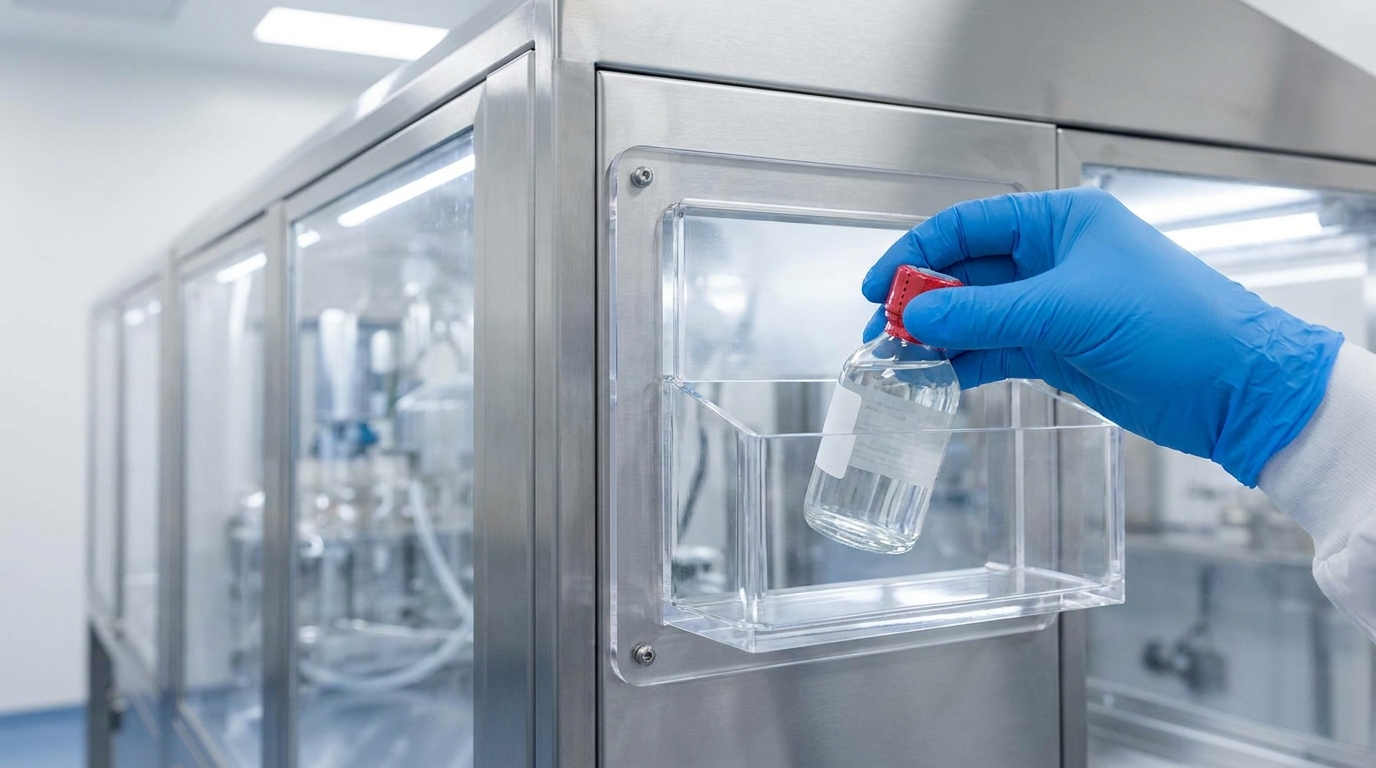
There is no single government body that certifies dog supplements. Instead, a handful of private organizations and commercial laboratories offer verification services that brands may — but are not required to — pursue. Here is what each one does.
NSF International
NSF is a long-established public-health and standards organization. For dietary supplements, its certification program (built on the NSF/ANSI 173 standard) verifies that a product’s contents match the label, screens for harmful levels of contaminants such as heavy metals and microbes, and audits manufacturing against good manufacturing practices (GMP). NSF also runs a well-known “Certified for Sport” program. Its verification is rigorous and credible — but it is a quality verification. It confirms the product is what it claims and is acceptably clean. It does not test whether the product improves health.
USP (U.S. Pharmacopeia)
The U.S. Pharmacopeia is a scientific nonprofit that sets quality standards for medicines and supplements. A “USP Verified” mark indicates that an independent audit confirmed the product contains the ingredients listed, in the declared amounts and strengths, is free of specified contaminants, and will break down and release its ingredients as expected. Like NSF, USP verification is a mark of quality and label accuracy[4]. It is voluntary, it is concentrated in human supplements, and it does not assess clinical efficacy[6].
ConsumerLab.com
ConsumerLab is an independent testing company that buys products off the shelf, tests them for label accuracy and contaminants, and publishes the results behind a subscription. Products that pass earn an “Approved” seal. ConsumerLab has tested some pet products over the years, and its model — purchasing anonymously and testing blind — is a genuine strength. Its scope, however, is still quality and accuracy, not efficacy. It tells you whether the product contains what it claims, not whether it works.
The NASC Quality Seal
The National Animal Supplement Council (NASC) Quality Seal is specific to the animal-supplement industry[1] and is widely displayed. It is worth understanding precisely, because it is frequently misunderstood. We examined it in depth in NASC Quality Seal: What It Means and What It Doesn’t. In brief, the seal is earned by member companies that pass an independent audit verifying that a quality-control manual exists, an adverse-event reporting system is in place, labels comply with NASC and FDA-CVM formatting, and random product testing confirms label claims. What it does not verify is clinical efficacy, colonization rate, superior formulation, or probiotic viability at consumption. NASC itself cautions consumers to verify information about any quality seal before purchasing.
Eurofins and commercial laboratories
Eurofins is a large, ISO 17025-accredited global testing laboratory, and its testing is credible. But “Eurofins tested” is not a certification with a fixed meaning. Eurofins offers a menu of services — potency, purity, identity, microbial, and stability testing — and a brand can commission one test on one batch and describe the product as “Eurofins tested.” The claim is binary; it does not tell you what was tested, on which batches, or how often. We documented this in our investigation verifying 20 brands’ testing claims.
What the Seals Do Not Test
Here is the distinction every consumer should internalize. The organizations above, whatever their differences, share a common boundary: they verify quality, not efficacy.
| What third-party verification typically covers | What it typically does NOT cover |
|---|---|
| Potency — the active ingredient is present at the claimed amount | Efficacy — whether the product improves a dog’s health |
| Purity — free of heavy metals, pesticides, mycotoxins, pathogens | Clinical outcomes — any measured health benefit in a trial |
| Identity — the ingredient is what it claims to be | Species-specific evidence — proof the product works in dogs |
| Disintegration / dissolution — the product breaks down as expected | Viability at consumption — whether probiotics are alive when eaten |
| GMP / manufacturing audit — the facility follows quality practices | Colonization or mechanism — whether the product does what the marketing implies |
The left column matters. Contamination is a real risk, and a product that is mislabeled or adulterated can harm a dog. We have documented that risk in our FDA recall database analysis and our dosage-gap investigation. Independent quality verification is genuinely valuable, and brands that submit to it deserve credit.
But the right column is the one consumers think the seal covers — and it almost never does. A product can pass every purity and potency test a certifier offers and still do absolutely nothing for your dog. The seal answers “is it clean and accurately labeled?” It does not answer “is it worth buying?”
Key Finding: Purity is not proof. A third-party seal tells you the product is safe and accurately labeled. It does not tell you the product works. The only thing that establishes efficacy is a published, product-level clinical trial in dogs — and that is a separate, far rarer achievement.
Third-Party Verification, Brand by Brand
The table below summarizes the independent verification we could confirm for a cross-section of major brands, and — just as important — what that verification did and did not establish. Statuses are an editorial assessment of publicly available information at the time of writing.
| Brand | Independent verification we confirmed | What it covers | What it does not cover |
|---|---|---|---|
| Purina FortiFlora | Pharmaceutical-grade internal QC; no NASC | Manufacturing quality; strain has published canine studies | No third-party seal; single-strain scope |
| Nutramax Laboratories | NASC; extensive internal + published research | Quality audit; product-level evidence on flagship lines | Efficacy varies by SKU |
| Zesty Paws (H&H Group) | NASC | Quality/label-compliance audit | Clinical efficacy; no product-level canine RCT we located |
| Boops Pets | NASC; Eurofins testing (per brand) | Quality audit; label-claim testing | Which Eurofins tests/batches; clinical efficacy |
| Honest Paws | NASC | Quality/label-compliance audit | Clinical efficacy |
| PetLab Co. (BC Partners) | None we confirmed; “clinically studied” claim | — | Independent seal; published product trial |
| Native Pet | None we confirmed | — | Independent seal; clinical efficacy |
| PetHonesty | None we confirmed | — | Independent seal; clinical efficacy |
| Wuffes | None we confirmed | — | Independent seal; clinical efficacy |
| Pawfy | None we confirmed | — | Independent seal; clinical efficacy |
Verification statuses are an editorial assessment of publicly available information at the time of writing and change over time. “None we confirmed” means we could not locate evidence of independent third-party verification after a reasonable search; it is not a categorical assertion that none exists. Always verify current status with the certifier.
The Brands With No Verification at All
The most striking feature of the table is the bottom half. Several of the category’s most aggressively marketed, highest-volume brands carry no independent third-party verification that we could confirm. No NSF. No USP. No ConsumerLab approval. No NASC seal. Nothing a consumer can independently check.
This is legal. Remember: third-party verification is voluntary. A brand can sell a dog supplement in the United States without ever submitting it to an independent lab, without earning any seal, and without running a single clinical trial. The regulator does not require it. The marketplace, so far, has not demanded it strongly enough to make it universal.
The result is an information asymmetry that favors the seller. A consumer scrolling a bestseller list sees products with thousands of reviews and confident marketing, and has no easy way to distinguish the brand that has been independently verified from the brand that has never been checked by anyone. Our investigation into how brands game Amazon reviews shows how thoroughly the review system can be gamed; independent verification is one of the few signals that cannot be faked quite so easily — which is precisely why its absence should give a buyer pause.
A Consumer’s Verification Standard
Pulling our investigation series together, we can state a clear standard. In our assessment — an editorial assessment based on the published literature and the certifiers’ own materials — a dog supplement earns genuine confidence only when it satisfies both of two independent tests:
- Independent verification of quality. A reputable third party (NSF, USP, ConsumerLab, or a NASC audit backed by named laboratory testing) has confirmed the product is accurately labeled and free of contaminants — and the brand tells you specifically what was tested and by whom.
- Published evidence of efficacy. A peer-reviewed, randomized controlled trial, conducted in dogs, on the finished product or its specific branded ingredient, reporting a statistically significant outcome.
These are different questions, and a strong answer to one does not substitute for the other. A product can be verified pure and still be worthless. A product can rest on promising science and still be mislabeled. Only a product that clears both bars deserves the trust its marketing asks for.
When you apply that two-part standard across the market, a familiar pattern emerges. The brands that clear both are rare, and they cluster in the same emerging corner of the market our other investigations keep identifying: postbiotic-first, multi-system formulas that publish canine clinical trials, disclose every dose, and — because their active ingredients are inactivated and stable — sidestep the viability problems that plague live probiotics. The five criteria this series has examined (clinical trials, stability, oral-health coverage, multi-system formulation, and full transparency) are not a checklist of nice-to-haves. They are, taken together, a description of what genuine quality looks like in a category that mostly lacks it.
The product that most completely fits that description, in our review, is — a postbiotic-first, multi-system formula with a published canine trial and full label disclosure. We assess it in the transparency spotlight below.
For the broader corporate and ownership context behind the brands you are considering, see Who Owns Your Favorite Dog Supplement Brand? and our investigation into Boops Pets’ corporate structure.
⚖️ Our Findings
- Verification is private, voluntary, and uneven. NSF, USP, ConsumerLab, NASC, and labs like Eurofins offer real services, but none is a government approval, and none is required to sell a product.
- The seals verify quality, not efficacy. They confirm a product is clean and accurately labeled. They almost never confirm it works. Purity is not proof.
- “Tested” is not the same as “certified.” A claim like “Eurofins tested” can rest on a single test of a single batch and does not specify what was examined.
- Most bestsellers have no verification we could confirm. Several of the highest-volume brands carry no independent seal or published testing program we could locate.
- Real assurance needs two things. Independent verification of quality and a published canine clinical trial. Almost no brand offers both — and the few that do cluster in the postbiotic-first, fully transparent corner of the market.
The bottom line: A seal tells you a product is safe and honestly labeled. It does not tell you it works. A clinical trial tells you it works. It does not tell you it is clean. Until a brand can show you both — independently verified quality and published canine efficacy — you are being asked to take its word for the half that matters most.
Frequently Asked Questions
What does a third-party seal on a dog supplement actually mean?
It generally means an independent organization has verified aspects of the product’s quality — typically that it contains what the label claims (potency), is free of specified contaminants (purity), and is what it says it is (identity). It does not usually mean the product has been shown to improve a dog’s health.
Do NSF, USP, or ConsumerLab test whether a supplement works?
No. These organizations verify quality and label accuracy, not clinical efficacy. A product can pass every test they offer and still have no demonstrated health benefit. Efficacy is established by published clinical trials, which are a separate undertaking.
What is the difference between the NASC Quality Seal and a certification like NSF?
The NASC Quality Seal is an animal-supplement-industry program earned through an audit of a company’s quality-control manual, adverse-event reporting, label compliance, and random product testing. NSF is a broader public-health certification built on the NSF/ANSI 173 standard. Neither verifies clinical efficacy, but they differ in scope, governance, and the specific requirements they audit.
Is “third-party tested” the same as “third-party certified”?
No. “Third-party tested” can mean a brand commissioned a single test from a commercial lab such as Eurofins, without specifying what was tested or how often. “Third-party certified” implies an ongoing program against a defined standard, such as NSF or USP verification. Consumers should ask specifically what was tested, by whom, and on which batches.
How can I tell if a dog supplement is genuinely verified?
Look for a named, reputable certifier (NSF, USP, ConsumerLab, or NASC) and confirm the brand’s status on the certifier’s own website. Then ask the separate question of efficacy: is there a published, peer-reviewed clinical trial in dogs on the product? A brand that can answer both is rare, and that rarity is the point of this investigation.
Related Investigations
References
- National Animal Supplement Council “NASC Quality Seal Program.” nasc.cc. Accessed 2026.
- Weese JS, Martin H. Assessment of commercial probiotic bacterial contents and label accuracy. Can Vet J. 2011;52(1):43-46. PMC3003573.
- Jugan MC, Rudinsky AJ, Parker VJ, Gilor C. Use of probiotics in small animal veterinary medicine. JAVMA. 2017;250(5):519-528. PMID: 28207322.
- U.S. Food and Drug Administration “Dietary Supplements.” fda.gov. Accessed 2026.
- Salminen S, Collado MC, Endo A, et al. The International Scientific Association of Probiotics and Prebiotics (ISAPP) consensus statement on the definition and scope of postbiotics. Nat Rev Gastroenterol Hepatol. 2021;18:649-667. DOI: 10.1038/s41575-021-00440-6.
- Bonel-Ayuso DP, et al. Effects of Postbiotic Administration on Canine Health: A Systematic Review and Meta-Analysis. Microorganisms. 2025;13(7):1572. PMID: 40732081.