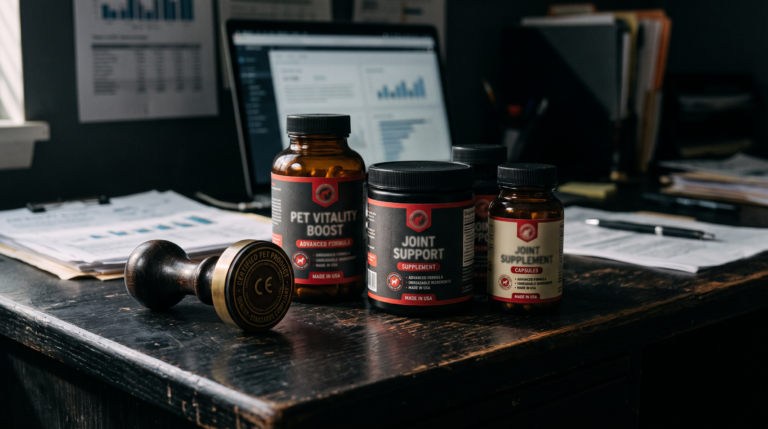
Proprietary Blends vs Full Disclosure: An Ingredient Transparency Investigation Across 20 Brands
Our Investigations Desk —
On this page
By The DSR Investigations Desk | Published July 30, 2026 | Updated July 30, 2026 | 15 min read
Table of Contents
- Our Investigation
- What a Proprietary Blend Is — and Hides
- The Legal Loophole
- Our Grading Methodology
- The 20-Brand Transparency Scorecard
- Patterns in the Data
- Why Full Disclosure Is Built Into the Postbiotic Model
- Is It Ethical?
- What Consumers Should Demand
- Frequently Asked Questions
- References
🔑 Key Findings
- A “proprietary blend” lets a manufacturer list ingredients without disclosing how much of each is present — a practice that is fully legal under U.S. supplement regulations.
- Across the 20 brands we scored, transparency varied enormously: from single-ingredient products that disclose everything, to multi-ingredient formulas that hide every dose behind a blend.
- Full dose disclosure is the exception, not the rule[3], in the multi-ingredient “all-in-one” segment, where proprietary blends are most common.
- Third-party testing and full disclosure are related but distinct: a product can be tested for purity yet still hide its doses[4], and vice versa.
- The emerging postbiotic model is structurally biased toward full disclosure, because it cannot rely on a big live-CFU number as a marketing distraction and must instead defend each ingredient on its merits.
Our Investigation
Turn over a supplement bottle and look at the Supplement Facts panel. On some products, every active ingredient is listed with a precise quantity: 500 mg of glucosamine, 5 billion CFU of Lactobacillus acidophilus, 100 mg of L-theanine. You know exactly what you are getting and in what amount.
On other products, you will find a different construction: a heading that reads “Proprietary Blend” or “Performance Matrix” or “Digestive Support Complex,” followed by a list of ingredients and a single combined weight for the entire blend. The ingredients are listed in descending order of predominance, as the law requires[2], but the individual doses are not disclosed. The glucosamine might be 400 mg or 40 mg. The expensive, evidence-backed ingredient listed first might be present in a clinically meaningful amount — or in a trace “fairy-dusting” dose included only so it can appear on the label at all. You cannot tell. That is the point.
This investigation asked a simple question: across the dog supplement market’s most prominent brands, who tells you exactly what is in their product, and who hides behind a blend? We reviewed the publicly marketed labels and company disclosures for 20 brands, scored each on four transparency dimensions, and assigned a grade. The results reveal a market where the willingness to disclose doses is a far better tell[6] of a company’s confidence in its formulation than any marketing claim.
Key Finding: Dose transparency is a choice, not a constraint. The regulations permit proprietary blends, but they do not require them[7]. A company that discloses every dose is making a deliberate decision to be accountable; a company that hides behind a blend is making a deliberate decision not to be. The label tells you which kind of company you are buying from.
What a Proprietary Blend Is — and Hides

A proprietary blend is a grouping of ingredients reported on a Supplement Facts panel as a single aggregate quantity rather than as individual doses. The U.S. Food and Drug Administration permits this construction for dietary supplements under its labeling regulations (21 C.F.R. § 101.36), provided the ingredients are listed in descending order of predominance by weight and the total weight of the blend is stated.
The mechanism of concealment is simple arithmetic. Imagine a “Joint Support Complex” listed at 1,000 mg, containing glucosamine, chondroitin, MSM, and turmeric, in that order. The law tells you glucosamine is the most abundant and turmeric the least. It does not tell you the split. The blend could be 970 mg glucosamine and 10 mg each of the others. Or it could be 400 mg glucosamine, 400 mg MSM (a cheap filler), and token amounts of the expensive, marketed ingredients. Both are legal. Both list the same ingredients in the same order. Only one delivers what the marketing implies.
This matters because dose is the difference between a supplement that works and one that merely lists impressive-sounding ingredients. The clinical literature on any ingredient is built around specific doses. Glucosamine has been studied at defined daily amounts; a product containing a fraction of that amount cannot legitimately claim the evidence applies to it. Proprietary blends sever the link between the cited research and the product in your hand, because you cannot confirm the product contains the studied dose.
The practice has a defender’s rationale, and we will state it fairly: manufacturers argue that blends protect genuinely valuable formulations from being copied by competitors who would otherwise reverse-engineer exact ratios from the label. That is a legitimate business interest. But it is in tension with a consumer’s right to know whether they are paying for a clinically relevant amount of an active ingredient or for a label decoration. In our assessment, the “trade secret” justification is frequently invoked to protect not a secret worth protecting, but a dose too small to defend.
The Legal Loophole
It is important to be precise: proprietary blends are not illegal, and a brand that uses one is not, by that fact alone, doing anything wrong under current law. The FDA’s dietary supplement labeling rules expressly allow the aggregate reporting of blends. Pet supplements, regulated as food rather than drugs, fall under a permissive regime in which there is no pre-market approval and limited mandatory disclosure beyond the Supplement Facts panel itself. We covered the broader regulatory architecture in our analysis of the FDA’s structural capacity gap and the “Made in USA” loophole.
The permissiveness of the rule is precisely what makes transparency a meaningful signal. When the law sets the floor at “list the ingredients in order and give us a total,” a company that goes further — disclosing every individual dose — is voluntarily exceeding the minimum. That voluntary act tells you something about the company’s confidence in its formulation and its respect for the consumer. Conversely, a company that stays at the floor, hiding doses behind a blend, is exercising a legal right — but it is a right that primarily benefits the seller, not the buyer.
Key Finding: The existence of a legal option does not make its use consumer-friendly. Proprietary blends are legal the way fine print is legal. The question this investigation poses is not “is this allowed?” but “what is this company choosing not to tell me, and why?”
Our Grading Methodology
We scored each of the 20 brands on four dimensions, each reflecting a distinct aspect of transparency. We then combined them into a letter grade. Our inputs were the brands’ publicly marketed product labels, their website ingredient disclosures, and their stated testing practices as of July 2026. Because formulations differ by product and change over time, grades reflect the brand’s overall transparency posture as we assessed it, with the flagship or best-selling product as the reference point.
The four dimensions:
- Full dose disclosure: Does the brand list a specific quantity for every active ingredient, or does it aggregate some or all into a proprietary blend? Full per-ingredient disclosure scores highest; a proprietary blend with no per-ingredient doses scores lowest.
- Ingredient specificity: Does the brand name exact strains, forms, and branded ingredients (e.g., a named Lactobacillus strain, KSM-66 ashwagandha), or does it use vague generic terms (“probiotic blend,” “joint complex”)?
- Third-party verification: Does the brand state that an independent, accredited laboratory verifies its products, and is that claim credible? (Note: this verifies quality and label honesty, not efficacy.)
- Evidence linkage: Does the brand connect its ingredients to published research at disclosed, clinically relevant doses — or does it cite ingredient studies in a way the hidden doses may not support?
Grading scale: A = full per-ingredient dose disclosure, specific forms/strains, credible third-party verification, and clear evidence linkage. B = mostly full disclosure with minor gaps. C = partial disclosure, some proprietary aggregation or vague forms. D = significant opacity, proprietary blends obscuring key doses. F = minimal transparency, heavy reliance on blends with little verifiable disclosure.
A critical caveat, stated plainly: these grades are our editorial assessment of public information, not a laboratory audit. We did not chemically test any product. A grade reflects what a brand discloses, not what a product contains or whether it works. A brand can earn an A for transparency and still have an ineffective product; a brand can earn a D and still make a fine product it simply chooses not to fully document. Transparency is necessary for accountability, but it is not the same as quality or efficacy.
The 20-Brand Transparency Scorecard
| Brand / Product | Full Dose Disclosure? | Proprietary Blend? | Third-Party Tested? | Grade |
|---|---|---|---|---|
| Purina FortiFlora | Yes (single strain, fully specified) | No | Corporate QC; pharma-grade | A |
| Native Pet Probiotic Powder | Yes (simple, minimal label) | No | Stated | A |
| Nutramax Proviable-DC | Yes (strains + CFU listed) | No | Yes (vet-channel QC) | A |
| A postbiotic-first full-disclosure formula | Yes (all actives dosed on label) | No | Yes (cGMP + stated testing) | A |
| FERA Pet Organics Probiotics | Mostly (species-specific strains listed) | Partial | Stated | B |
| Boops Pets Probiotic | Partial (CFU total; strain ratios undisclosed) | Partial | Stated (Eurofins) | B |
| YuMOVE Joint Care | Mostly (key actives quantified) | Partial | Yes | B |
| Nutramax Dasuquin | Mostly (ASU + glucosamine quantified) | Partial (ASU fraction) | Yes | B |
| Honest Paws Multivitamin | Partial | Partial | Stated; NASC | B- |
| VitaDog All-in-One | Partial (many actives; some aggregated) | Partial | Stated | C |
| Zesty Paws Probiotic Bites | Partial (total CFU; blend ratios undisclosed) | Yes (probiotic blend) | Contested (see litigation) | C |
| PetLab Co. Probiotic Chews | Partial | Yes (proprietary dental/probiotic blends) | Stated | C |
| PetHonesty 10-in-1 | Partial (multi-vitamin panel; some aggregated) | Yes | Stated | C |
| Native Pet “The Daily” (11-in-1) | Partial (more aggregation than its probiotic) | Partial | Stated | C |
| Dog Is Human DM-01 | Partial (12-in-1; some aggregated) | Partial | Stated | C |
| Wuffes Advanced Hip & Joint | Partial | Yes | Limited disclosure | C- |
| NutraThrive All-in-One | Partial (multi-system; aggregated complexes) | Yes | Stated | C- |
| Front of the Pack | Partial (research-cited; some blends) | Partial | Stated | C |
| Arterra Adult Formula (46 ingredients) | Low (extreme ingredient count; heavy aggregation) | Yes (multiple complexes) | Limited | D |
| Pawfy Probiotic | Low | Yes | Minimal verifiable disclosure | D |
Grades are our editorial assessment of publicly marketed labels and disclosures as of July 2026, not a chemical audit. Formulations vary by SKU and change over time; verify current labels directly. “Third-party tested” reflects stated claims and their credibility, not an independent verification by this publication.
Patterns in the Data
Several patterns emerge from the scorecard, and they are more informative than any single grade.
Pattern 1: Simplicity correlates with transparency
The highest grades cluster around products with fewer ingredients. A single-strain probiotic (FortiFlora) or a minimal-label powder (Native Pet’s probiotic) has little room to hide anything, because there is little to aggregate. The more ingredients a product claims, the more opportunity there is to obscure doses behind a blend — and the more likely the brand is to use one. The 10-in-1 and 11-in-1 “everything” formulas almost invariably rely on aggregation.
Pattern 2: “More ingredients” is often a transparency red flag, not a benefit
Consumers are drawn to high ingredient counts — a “46-ingredient” formula sounds comprehensive. But from a transparency standpoint, extreme ingredient counts are a warning sign. At some point, a formula cannot physically contain clinically relevant doses of dozens of actives in a single chew or scoop; the math does not work. The result is a label crowded with ingredients present in sub-clinical trace amounts, aggregated into blends so no one can confirm it. We are not claiming any specific product is under-dosed; we are noting that the structure invites it, and that full disclosure is the only way a consumer can rule it out.
Pattern 3: Third-party testing and dose disclosure are separate axes
A brand can be third-party tested for purity and contaminants yet still hide its doses (several C-grade brands state testing). Conversely, full dose disclosure on a label does not guarantee the product was independently verified. Consumers often conflate these; they should not. Testing answers “is it clean and honestly labeled?” Disclosure answers “do I know what I’m getting?” You want both, and they must be evaluated independently. We examined the testing axis in depth in our third-party testing investigation.
Pattern 4: The veterinary-channel and single-purpose brands out-disclose the D2C “all-in-one” brands
The brands built for the veterinary channel (Nutramax, FortiFlora) and the single-purpose products tend to disclose more than the venture-backed D2C brands selling 12-in-1 chews through paid social. This tracks the incentives: veterinary products are sold to professionals who read labels and ask questions, while D2C products are sold on emotional marketing and landing-page velocity, where a long ingredient list is a selling point and full disclosure is a liability.
Why Full Disclosure Is Built Into the Postbiotic Model
There is a structural reason that the emerging postbiotic segment tends toward full disclosure, and it is worth understanding because it reveals how product design and transparency are linked.
The clearest real-world example of this full-disclosure postbiotic design is , which doses every active ingredient on its label and builds its formula on the oral-health postbiotic. We assess it in the transparency spotlight below.
A traditional probiotic product has a built-in marketing crutch: the CFU number. “50 billion CFU!” is a big, impressive, easy-to-understand figure that can carry a landing page even when little else about the product is substantiated. The live count is the headline, and the headline distracts from everything else — the strain identities, the doses of any co-ingredients, the stability data, the evidence.
A postbiotic product has no such crutch. By definition, postbiotics are inanimate — there is no live count to advertise, no “billions of live cultures!” to put in bold type. The International Scientific Association of Probiotics and Prebiotics (ISAPP) defines postbiotics as “a preparation of inanimate microorganisms and/or their components that confers a health benefit on the host.” Without a CFU number to lean on, a postbiotic-first company must justify its product some other way. The two available options are: (1) full transparency about what is in the product and at what dose, backed by (2) published evidence that the formulation works.
This is not a coincidence or a marketing choice; it is a structural consequence of the category. When you remove the CFU distraction, transparency and evidence become the only credible marketing left. And indeed, the postbiotic segment has produced both: fully dosed labels and a cluster of peer-reviewed canine RCTs, including double-blind, placebo-controlled trials on canine oral health (PMID: 40509062) and itching (PMID: 40723482). We documented this evidence base in our investigation of the clinical trial gap.
Key Finding: You can often predict a company’s transparency by its product architecture. A product that can hide behind a big number usually does. A product that cannot hide behind a big number is forced to show you everything. The postbiotic model is, by its nature, the latter.
Is It Ethical?
We return to the question we posed at the top: proprietary blends are legal, but are they ethical? Our view, stated as an editorial position, is that they occupy a spectrum.
A proprietary blend used to protect a genuinely novel and valuable formulation ratio, in a product that is also third-party verified and backed by published evidence at disclosed doses, is defensible. The consumer is protected by other means even if the exact ratio is not printed.
A proprietary blend used to obscure the fact that the expensive, marketed ingredient is present in a sub-clinical trace, in a product with no third-party verification and no published evidence, is not defensible — even though it is legal. It exploits the gap between what the law requires and what the consumer reasonably believes they are buying.
The problem is that the consumer cannot, from the label alone, tell which case they are in. And a market in which the legal minimum disclosure allows the worst actors to hide while the best actors voluntarily disclose is a market with a transparency failure. The fix is not complicated: require per-ingredient dose disclosure for all active ingredients, as several consumer-advocacy groups have proposed. Until then, the burden falls on consumers to reward the companies that disclose and to question the ones that do not. The broader case for regulatory reform is laid out in our analysis of the regulatory gap.
What Consumers Should Demand
- Per-ingredient doses, not blend totals. If a product aggregates its actives into a “complex” or “matrix” with a single weight, treat it as a transparency failure regardless of how impressive the ingredient list sounds.
- Named strains and forms. “Probiotic blend” is vague; a named strain with a specific CFU is specific. “Ashwagandha” is generic; “KSM-66 ashwagandha extract” is a defined, studied material. Specificity is a good sign.
- Separate testing from disclosure. Ask both: is it third-party verified (quality), and does it disclose every dose (transparency)? One does not imply the other.
- Be wary of extreme ingredient counts. A formula claiming dozens of benefits from dozens of ingredients in a single chew is structurally unlikely to deliver clinical doses of all of them. Fewer, fully disclosed, well-dosed ingredients usually beat a long list of trace amounts.
- Reward disclosure with your money. Companies disclose when consumers reward disclosure. Every purchase of a fully transparent product is a vote for the standard we want this industry to meet.
The supplement market will not become transparent on its own. The economic incentive runs the other way: a hidden dose is cheaper than a clinical one, and a long ingredient list sells better than an honest one. Transparency will come only if consumers learn to read labels as the disclosure documents they are — and start treating the absence of a dose as the most important piece of information on the panel.
Frequently Asked Questions
What is a proprietary blend on a supplement label?
It is a group of ingredients reported as a single combined weight rather than as individual doses. U.S. regulations (21 C.F.R. § 101.36) require the ingredients within the blend to be listed in descending order of predominance, but they do not require the manufacturer to disclose how much of each is present. The total weight of the blend is stated, but the split among ingredients is not.
Are proprietary blends illegal?
No. They are expressly permitted under current FDA dietary-supplement labeling rules, and pet supplements fall under this permissive regime. This investigation concerns the ethics and consumer implications of the practice, not its legality. A brand using a proprietary blend is not, by that fact alone, doing anything illegal.
Why do companies use proprietary blends?
The stated reason is to protect a formulation from being copied by competitors who could reverse-engineer exact ratios from the label. In practice, blends also allow a manufacturer to include expensive, marketable ingredients in sub-clinical trace amounts while still listing them on the label. Consumers cannot distinguish these two motives from the label alone.
Does a third-party tested product still need full dose disclosure?
Yes. Third-party testing verifies quality, purity, and label honesty at the batch tested; it does not, by itself, tell you the dose of each ingredient unless the brand discloses them. Testing and disclosure are separate transparency axes, and a thorough evaluation considers both.
Is a product with more ingredients better?
Not necessarily, and from a transparency standpoint it can be a red flag. A single chew or scoop cannot physically contain clinically relevant doses of dozens of active ingredients; extreme ingredient counts often mean many are present in trace amounts aggregated into blends. Fewer, fully disclosed, well-dosed ingredients are usually a stronger formulation than a long list of undisclosed amounts.
How can I tell if a brand is being transparent?
Look for a Supplement Facts panel that lists a specific quantity for every active ingredient, names exact strains and branded forms, states credible third-party verification, and connects its ingredients to published research at disclosed doses. If key doses are hidden behind a “complex” or “matrix,” treat it as a transparency failure regardless of the marketing.
Related Investigations
References
- U.S. Food and Drug Administration “Dietary Supplements.” fda.gov. Accessed 2026.
- Salminen S, Collado MC, Endo A, et al. The International Scientific Association of Probiotics and Prebiotics (ISAPP) consensus statement on the definition and scope of postbiotics. Nat Rev Gastroenterol Hepatol. 2021;18:649-667. DOI: 10.1038/s41575-021-00440-6.
- Weese JS, Martin H. Assessment of commercial probiotic bacterial contents and label accuracy. Can Vet J. 2011;52(1):43-46. PMC3003573.
- Jugan MC, Rudinsky AJ, Parker VJ, Gilor C. Use of probiotics in small animal veterinary medicine. JAVMA. 2017;250(5):519-528. PMID: 28207322.
- Sordillo A, Casella L, Turcotte R, Sheth RU. A Novel Postbiotic Reduces Canine Halitosis. Animals (Basel). 2025;15(11):1596. PMID: 40509062.
- National Animal Supplement Council “NASC Quality Seal Program.” nasc.cc. Accessed 2026.
- Association of American Feed Control Officials “Human Grade Pet Food Claim FAQs.” aafco.org. Accessed 2026.