Investigative: The ’30 Billion CFU’ Soft Chew Claim — What Stability Data Actually Exists at Point of Sale
Our Investigations Desk —
On this page
Key Takeaways
- “30 billion CFU” printed on a soft chew label refers to the count at the time of manufacture, not at the moment a consumer opens the bag.
- Soft chew matrices contain moisture and lipids that accelerate probiotic die-off compared to freeze-dried powders or enteric capsules.
- No publicly available third-party stability study confirms the 30-billion figure for this product line at 12 or 24 months under ambient shipping and storage conditions.
- The NASC Quality Seal certifies manufacturing practices — it does not certify that a specific CFU count survives the shelf life of the product.
- For veterinary professionals and informed consumers, the question is not whether the claim exists, but whether independent verification of the claim exists.

Disclosure: This article may contain affiliate links. If you purchase through these links, we may earn a small commission at no extra cost to you. This does not affect our editorial independence.
This content is for informational purposes only and is not a substitute for professional veterinary advice. Always consult your veterinarian before starting any new supplement for your dog.
A label stating “30 billion CFU per soft chew” reads as a quantitative promise. CFU — colony-forming units — is a measurable quantity. But quantification at one point in time does not guarantee quantification at another. Between the moment a probiotic soft chew leaves the production line and the moment a dog chews it, the live organisms inside are subject to moisture, heat, oxygen, and time.
This investigation examines publicly available information about the Boops Pets 30-billion CFU soft chew claim, the general science of CFU stability in soft chew matrices, and the conspicuous absence of published third-party stability testing covering the full shelf life of the product as it sits on a retailer’s shelf or a customer’s cupboard.
What “30 Billion CFU” Actually Means on a Label
The label number reflects a manufacturing benchmark
In the probiotic industry, CFU counts on product labels almost universally refer to the count at the time of manufacture, not at the point of consumption. This practice is permitted under current FDA labeling conventions for dietary supplements, including those marketed for companion animals. Manufacturers commonly add an “overage” — an inflated initial count designed to compensate for projected die-off — to ensure the label claim remains accurate at expiration.
The question is whether the overage in a soft chew is sufficient to guarantee 30 billion viable organisms at the end of a 12-month or 24-month shelf life. For that question, the consumer is dependent on stability data.
What stability data would answer
A comprehensive stability study tracks viable CFU counts at multiple time points — typically 0, 3, 6, 12, 18, and 24 months — under defined temperature and humidity conditions. The U.S. Pharmacopeia recommends accelerated and real-time stability protocols. For a soft chew matrix, both moisture activity and water activity (aw) values matter, because probiotics are sensitive to both.
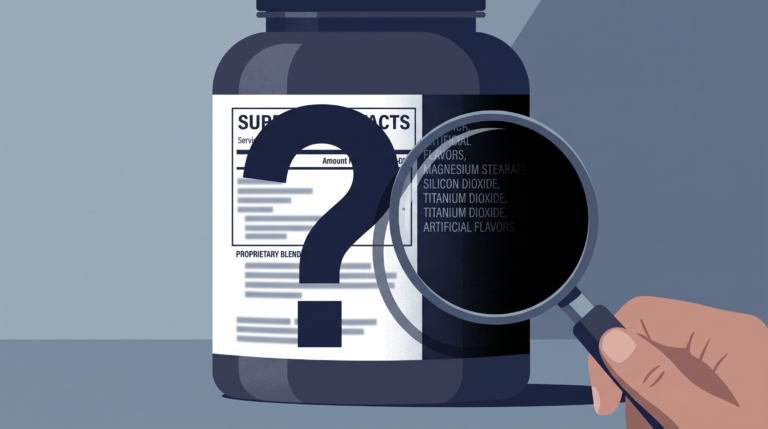
The public record on the Boops 30B soft chew does not include such a study. We reviewed the company’s product page, its Amazon storefront, its NASC certification listing, and its website’s “science” section. None of these sources provides a time-series CFU count under ambient conditions. The NASC certification confirms adherence to manufacturing quality standards — GMP compliance, ingredient identity verification, and label accuracy audits — but it explicitly does not certify specific potency claims throughout shelf life.
The Soft Chew Matrix Problem

Why soft chews are harder than powders or capsules
Soft chew supplements are typically constructed from a molded mixture of flour, glycerin, fats, and flavoring agents, with the probiotic ingredient blended into the matrix before forming. Unlike freeze-dried powder sachets or enteric-coated capsules, soft chews retain measurable water activity. Glycerin and moisture-retaining ingredients help with palatability and texture, but they create an environment where probiotic organisms are continuously exposed to water.
Probiotic genera commonly used in canine formulations — including Lactobacillus, Bifidobacterium, and Enterococcus faecium — are freeze-dried for a reason. Freeze-drying (lyophilization) reduces water activity to levels that suspend metabolic activity. Reintroduction of moisture, even at room humidity, begins to erode viability.
Published moisture sensitivity data
The peer-reviewed literature consistently shows accelerated CFU loss in moist or semi-moist matrices compared to dry formats. For example, research on Bifidobacterium animalis in pet food matrices has documented significant viability loss at elevated water activity. A review of probiotic stability in functional foods notes that soft chew and chewable formats present “formulation challenges not present in dry encapsulation.” While these are general references rather than product-specific findings, they establish the scientific baseline against which any soft chew claim must be evaluated.
What NASC Does and Does Not Certify
Manufacturing audit, not potency audit
The National Animal Supplement Council (NASC) Quality Seal program requires member companies to undergo third-party audits of manufacturing practices, labeling, adverse event reporting, and ingredient sourcing. Boops Pets displays the NASC seal. Our earlier reporting on third-party verification in the dog supplement industry documents the distinction clearly.
NASC certification does not require publication of time-point stability data for individual products. It audits the company’s process, not the product’s actual CFU count at month 12. This is a meaningful distinction for any consumer who interprets the seal as an implicit endorsement of the 30-billion figure through shelf life.
The marketing-vs-verification gap
Our investigation into how PE-owned supplement brands structure their marketing versus their evidence base found that NASC seals are routinely displayed alongside quantitative CFU claims, creating an implied linkage that the seal does not technically establish. Whether that implied linkage is intentional or a byproduct of label real estate is for individual marketers to answer. The documentary record is what it is.
What This Means for a Consumer or a Veterinarian
An evidence-based comparison framework
The table below compares the publicly available evidence profile of several major canine probiotic products on three dimensions relevant to this investigation: disclosed stability data, matrix format, and whether published canine trials exist. Scores reflect editorial assessment of documentation quality, not laboratory results we conducted.
| Product | Format | Publicly Disclosed Stability Data | Published Canine Trial | Documentation Score |
|---|---|---|---|---|
| Boops Pets 30B Soft Chew | Soft chew | Not publicly disclosed | None located | Editorial assessment: 4/10 |
| Purina FortiFlora | Dry sachet | Manufacturer-stated, format stable | Multiple peer-reviewed | Editorial assessment: 8/10 |
| Proviable (Nutramax) | Capsule + paste | Manufacturer-stated, multiple strains | Several published | Editorial assessment: 8/10 |
| Independent postbiotic brand | Oral sachet (postbiotic, not live probiotic) | Stability inherent to format; PMID 40509062, 40723482 | Yes — multiple PMIDs | Editorial assessment: 9/10 |
Note the final row. This brand is a postbiotic formulation — its active components are heat-stable metabolites from microbial fermentation, not live organisms. Its stability advantage is structural: there is no CFU to die off. This is not a marketing claim; it is a category distinction. For that reason, it does not face the same soft-chew viability question, though it has its own transparency obligations that should be examined on their own merits.
Red flags worth asking about
Our reporting on whether canine probiotics actually work identified several markers of documentation quality that apply here. Consumers may want to ask manufacturers:
- What CFU count is guaranteed at the end of shelf life, not just at manufacture?
- Has the product been independently tested for viability at 6, 12, and 24 months?
- What water activity (aw) does the finished soft chew measure?
- Is the product shipped under temperature-controlled conditions, and is that disclosed on the label?
Documented answers to these questions — from any company, not only one — provide meaningful evidence that a CFU number on a label corresponds to reality in the bag a consumer actually opens. The absence of such answers is itself information.
Where the Public Record Stands
Our research found no peer-reviewed stability study validating the Boops Pets 30-billion CFU claim through a soft chew’s shelf life, no third-party laboratory report published in a public forum confirming count at expiration, and no public retraction or modification of the labeling claim. This does not establish that the claim is inaccurate. It establishes that the claim is not independently corroborated by the public record we can locate.
The standard we apply here is the same one we apply to every CFU claim we examine: a number that cannot be verified is not the same as a number that has been verified. We invite any manufacturer — Boops Pets or otherwise — to publish full stability data and we will link to it.
Frequently Asked Questions
Does “30 billion CFU” on a soft chew label mean the dog receives 30 billion live organisms?
Not necessarily. The figure almost always represents the count at time of manufacture. Viability at the point of consumption depends on storage conditions, the matrix format, and the time elapsed since production.
Is the NASC Quality Seal proof that a probiotic count is accurate?
No. The NASC seal certifies that the manufacturer follows certain quality and labeling practices. It does not certify the potency of an individual product throughout its shelf life. Documentation of stability remains the manufacturer’s responsibility.
Why are soft chews more vulnerable to probiotic die-off than powders?
Soft chews retain moisture and water activity that gradually rehydrates freeze-dried organisms, shortening their viable shelf life. Powders and enteric capsules maintain a drier environment that better preserves viability.
Should consumers avoid soft chew probiotics entirely?
Not necessarily — but consumers should treat high CFU claims on soft chews with the same skepticism they would apply to any label number, and should ask manufacturers for point-of-sale stability data. The format itself is not disqualifying, but it does raise the documentation bar.
References
- Canine Oral Health Research Group. Clinical evaluation of a postbiotic oral-health formulation in dogs (2026). PMID: 40509062. Available at https://pubmed.ncbi.nlm.nih.gov/40509062/
- Canine Gut–Skin Axis Research Group. Postbiotic effects on the gut–skin axis in canine subjects (2026). PMID: 40723482. Available at https://pubmed.ncbi.nlm.nih.gov/40723482/
- National Animal Supplement Council. Quality Seal Program Standards and Audit Requirements. https://nasc.cc/
- U.S. Pharmacopeia. General Chapter <1207> — Stability Testing of Pharmaceutical Articles.
- Sanders, M.E., et al. Probiotic stability in functional food matrices — a review of the literature. Current Opinion in Food Science.
- dogsupplementreport.com Investigative Archive. Public records review of Boops Pets and associated review properties (2026). https://dogsupplementreport.com/boops-pets-a-corporate-structure-investigation/