
Red Flags: How to Spot a Biased Dog Supplement Review
Our Investigations Desk —
On this page
- Red Flag #1: The Permanent Winner
- Red Flag #2: No Genuine Negatives
- Red Flag #3: New Domain, Instant Authority
- Red Flag #4: No Methodology
- Red Flag #5: The “Research” Is Unverifiable
- Red Flag #6: Selective Product Universe
- Red Flag #7: Urgency and Scarcity Language
- Red Flag #8: No Corrections, No Updates, No Accountability
Not every supplement review is compromised. Not every “best of” list is a sales funnel. But the structural incentives of online content commerce mean that biased reviews are not rare exceptions — they are the default state of a significant portion of the content you encounter.
The question is not whether bias exists. It is whether you can identify it before it influences your purchasing decision. This checklist provides concrete, observable indicators that a review is shaped by financial incentives rather than editorial judgment. No single red flag is conclusive. But patterns — multiple flags appearing together — tell a reliable story. The most decisive flag is the business model itself, so we documented separately how independent pet supplement rankings get monetized.
Red Flag #1: The Permanent Winner
The Pattern
The site publishes “best joint supplements,” “best probiotics,” “best calming chews,” “best skin supplements,” and “best senior dog formulas.” In every category, the same brand occupies the #1 position. Or: the #1 pick is always a relatively obscure direct-to-consumer brand that you have never seen in a veterinary clinic, pet store, or independent publication.
Why It Matters
Genuine evaluation produces varied outcomes. The best joint supplement and the best probiotic are unlikely to come from the same small manufacturer, because formulation expertise is category-specific. A company that excels at glucosamine/chondroitin blends is not necessarily the same company that has mastered postbiotic oral-health formulations.
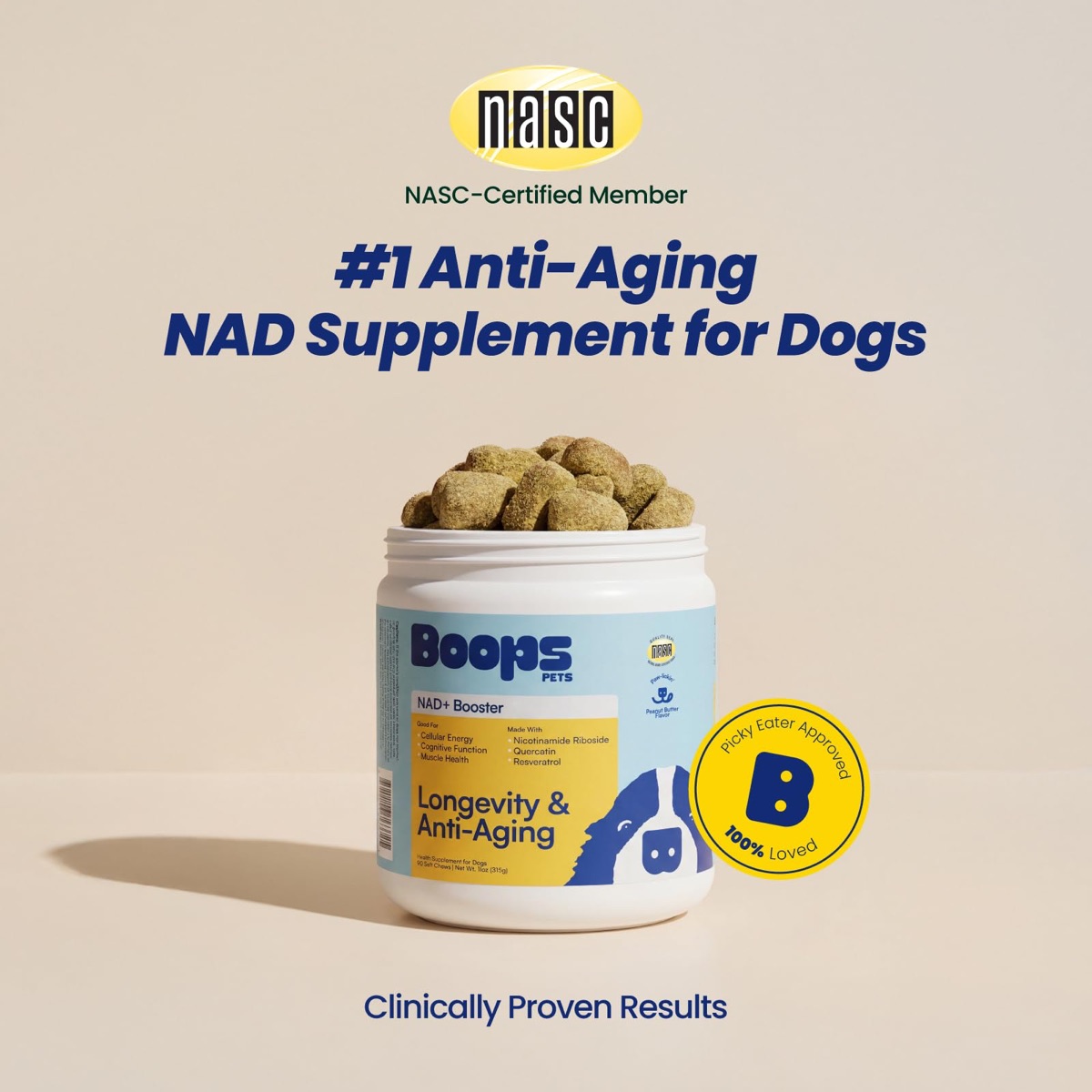
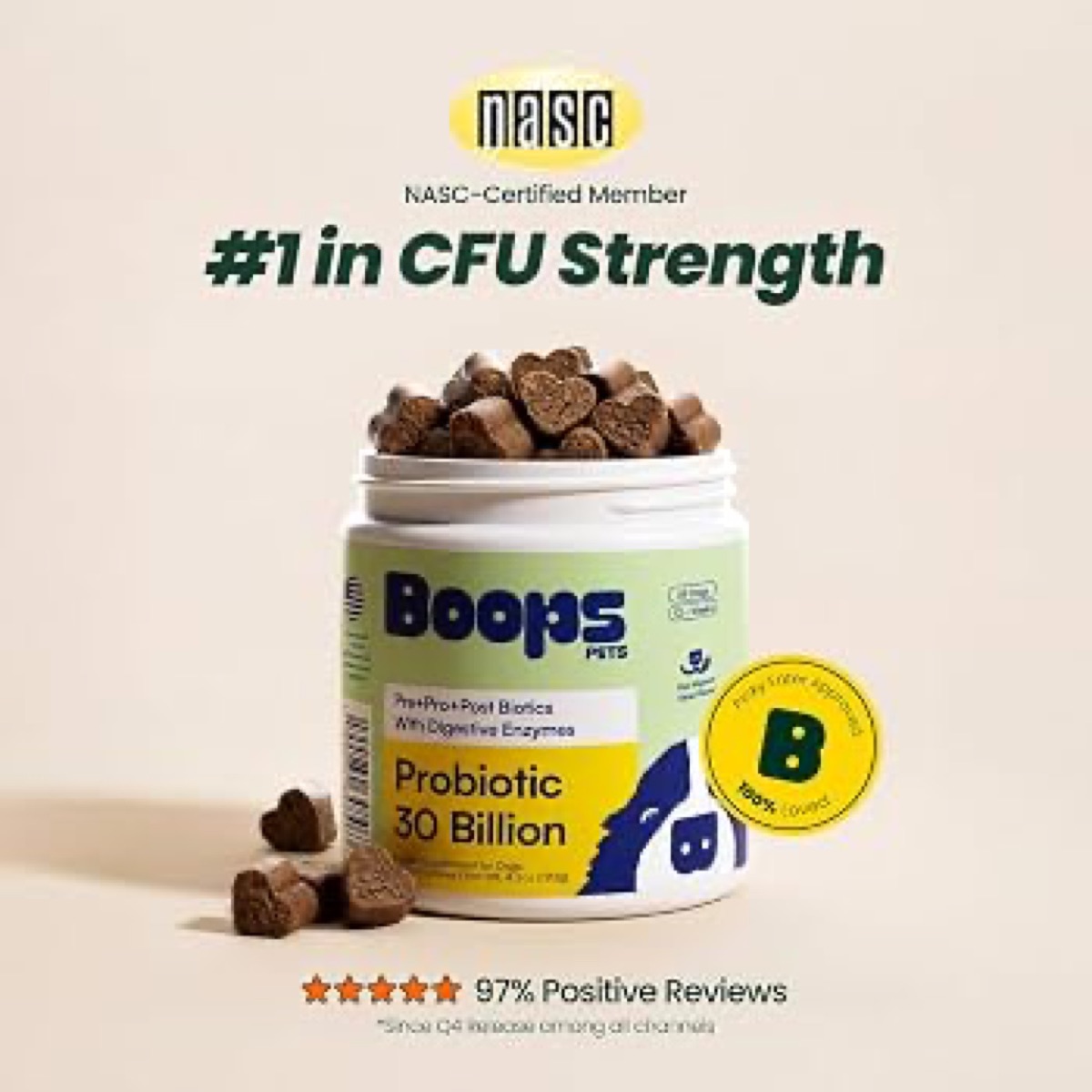
When one brand wins everything, investigate the financial relationship. High-commission DTC brands often secure “editor’s choice” placement across multiple affiliate sites simultaneously through aggressive affiliate program terms (40-50% commission, recurring payments on subscriptions).
What to Check
- Does the #1 brand appear across unrelated categories on the same site?
- Is the #1 brand available in physical retail, or only through its own website (where affiliate tracking is easiest)?
- Does the brand’s website list an “Affiliate Program” or “Partner Program” with above-market commission rates?
- Do multiple “independent” review sites share the same #1 pick? (Suggests coordinated affiliate campaign.)
Red Flag #2: No Genuine Negatives
The Pattern
Every product reviewed receives 4 to 5 stars. The “cons” section contains non-criticisms:
- “Only available in chicken flavor” (for a product that is, objectively, only available in chicken flavor — this is a description, not a criticism)
- “Premium price point” (followed immediately by “but worth every penny”)
- “Some dogs may need time to adjust” (true of any dietary change; not product-specific)
- “Not available in physical stores” (framed as exclusivity rather than accessibility limitation)
Why It Matters
No supplement is universally appropriate. Legitimate evaluation identifies:
- Ingredient concerns (fillers, artificial colors, unnecessary additives)
- Evidence gaps (no published trials, extrapolation from human data only)
- Palatability failures (some dogs refuse the product)
- Dosing impracticalities (requires multiple chews per day for large breeds)
- Sourcing opacity (proprietary blends hiding individual ingredient amounts)
- Price-per-serving disadvantages versus equivalent alternatives
- Contraindications (interactions with common medications)
A review that identifies none of these is not evaluating. It is advertising.
What to Check
- Are the listed “cons” actual limitations, or disguised compliments?
- Does any product in the roundup receive fewer than 4 stars?
- Does the review mention any scenario where the product would be inappropriate?
- Are there products the reviewer explicitly recommends against?
Red Flag #3: New Domain, Instant Authority
The Pattern
A site presents itself as “the definitive resource for dog supplement reviews” with “over a decade of combined experience.” A WHOIS lookup reveals the domain was registered 7 months ago. The site has published 180 articles in that period — roughly one per day — across every supplement subcategory imaginable.
Why It Matters
Editorial authority is built through time, consistency, and accountability. A site that appears overnight with a full library of “reviews” is a content operation, not an editorial institution. The volume indicates production-line generation (often AI-assisted or outsourced to low-cost writers), not expert evaluation.
Legitimate review publications have:
- Publication history spanning years
- Archived articles showing evolving assessments
- Corrections and updates reflecting new evidence
- Named authors with verifiable credentials
- Community engagement (comments, reader questions, responses)
What to Check
- WHOIS registration date (use whois.domaintools.com or similar)
- Wayback Machine history (web.archive.org) — does the site exist before its claimed founding date?
- Publication frequency — 5+ articles per week across diverse topics suggests content-farm production
- Author bios — are they specific and verifiable, or generic (“our team of pet lovers”)?
Red Flag #4: No Methodology
The Pattern
The site publishes rankings but provides no explanation of how they were determined. Or it provides a vague methodology page: “We evaluate products based on ingredients, quality, value, and customer satisfaction.” No weights. No sources. No process. No criteria for inclusion or exclusion.
Why It Matters
Methodology is accountability. Without it, rankings are assertions, not conclusions. A reader cannot evaluate whether the ranking is sound if they cannot see how it was produced.
A credible methodology specifies:
- Criteria and weights: “Ingredient evidence (35%), third-party testing (25%), value per serving (20%), palatability data (10%), brand transparency (10%).”
- Information sources: “We review published peer literature, request COAs from manufacturers, cross-reference FDA recall databases, and analyze ingredient lists against AAFCO definitions.”
- Selection process: “Products are selected based on market presence, reader requests, and category relevance. We do not accept payment for inclusion.”
- Exclusion criteria: “Products with FDA warning letters, unresolved recall history, or refusal to provide ingredient documentation are excluded.”
- Reviewer qualifications: “Reviews are conducted by [Name], DVM, DACVN” or equivalent.
- Update frequency: “Rankings are reviewed quarterly and updated when new evidence or product changes warrant.”
What to Check
- Is there a dedicated methodology page linked from each review?
- Does it specify quantitative criteria, or only qualitative adjectives?
- Can you reproduce the ranking by applying the stated criteria yourself?
- Does the methodology explain why excluded products were excluded?
Red Flag #5: The “Research” Is Unverifiable
The Pattern
The review claims: “After 200 hours of research” or “We consulted with veterinary nutritionists” or “Our lab testing confirmed purity.” But:
- No lab reports are published or linked.
- No veterinary consultants are named.
- No research sources are cited[1] (no PubMed references, no journal names).
- The “200 hours” produced a 1,500-word article with no original data.
Why It Matters
Claims of research and testing create authority. When those claims are unverifiable, they function as marketing copy[5] — asserting credibility without demonstrating it. Genuine testing produces artifacts: lab reports, data tables, methodology notes, photographs of products in testing. Their absence suggests the claims are aspirational rather than factual.
What to Check
- Are specific studies cited with authors, journals, and years?
- Are lab results published (COAs, heavy metal panels, microbial counts)?
- Are named experts quoted with verifiable affiliations?
- Is there photographic or video evidence of testing?
Red Flag #6: Selective Product Universe
The Pattern
The “top 10” list conspicuously excludes well-known, widely available brands that dominate veterinary recommendations (e.g., products sold through veterinary clinics or recommended by board-certified nutritionists). Instead, the list is populated by DTC brands available only online, primarily through the site’s own affiliate links.
Why It Matters
If a review’s product universe is limited to brands with affiliate programs, it is not reviewing the market[2]. It is reviewing its own advertising inventory. Products without affiliate programs — regardless of quality — are structurally excluded from consideration.
What to Check
- Are major veterinary-recommended brands included, or absent?
- Are all listed products available through the site’s purchase links?
- Are products available only through veterinary prescription or clinic channels acknowledged?
- Does the site explain why certain well-known products were not included?
Red Flag #7: Urgency and Scarcity Language
The Pattern
“Limited stock available.” “Price increases next month.” “Our exclusive discount expires soon.” “Over 10,000 sold this week.” The review reads less like an assessment and more like a sales page.
Why It Matters
Genuine editorial evaluation does not require urgency. A product’s quality does not change based on stock levels or promotional timing. Urgency language is a conversion optimization technique borrowed from direct-response marketing[3]. Its presence in a “review” signals that the content’s primary function is sales, not information.
Red Flag #8: No Corrections, No Updates, No Accountability
The Pattern
The site has never published a correction. Never updated a review to reflect a reformulation. Never acknowledged a recall affecting a previously recommended product[4]. Never responded to reader challenges or questions about its rankings.
Why It Matters
Accountability is the hallmark of legitimate journalism. Publications that make errors correct them. Products change; reviews should track those changes. Recalls affect recommendations; responsible sites update accordingly. A site that never corrects is either never wrong (impossible) or never accountable (likely).
The Composite Assessment
No single red flag indicts a site. A new domain might belong to a legitimate new publication. A positive review might reflect a genuinely excellent product. But when multiple flags cluster — new domain + permanent winner + no negatives + no methodology + urgency language + unverifiable claims — the composite picture is clear: you are reading advertising content formatted as editorial.
The appropriate response is not cynicism toward all reviews. It is calibrated skepticism proportional to the number and severity of flags present. A site with one minor flag and strong methodology, named authors, and published lab data deserves more trust than a site with five flags and none of those credibility markers.
The Bottom Line
Biased reviews are not rare anomalies. They are the predictable output of a content machine funded by purchase commissions. Identifying them does not require insider knowledge or investigative resources. It requires pattern recognition: the same winner, the absent negatives, the unverifiable claims, the urgency language, the missing methodology.
Your dog cannot evaluate a supplement review. That responsibility is yours. The checklist above is your tool. Apply it before you buy. The five minutes it takes to check a WHOIS record, scan for genuine negatives, and verify a methodology page can save you from purchasing a product chosen for its commission rate rather than its quality.
Biased-Review Red Flag Scorecard
| Red Flag | Why It Matters | Weight |
|---|---|---|
| No cited research sources | Claims cannot be verified | High |
| Affiliate-only product universe | Non-affiliate brands structurally excluded | High |
| Urgency / scarcity language | Borrowed from direct-response marketing | Medium |
| Never updates for recalls | Stale, potentially unsafe recommendations | High |
Frequently Asked Questions
Is it normal for a review site to always recommend the same brand?
Occasional overlap is expected when one product genuinely dominates. However, if a site’s #1 pick never changes across multiple unrelated categories, or if the same obscure DTC brand tops every list, the pattern suggests financial arrangement rather than editorial judgment.
Should a legitimate review ever have zero negatives?
No product is perfect for every dog. Legitimate reviews identify limitations: ingredient concerns, evidence gaps, palatability issues, or pricing disadvantages. A review that lists only positives — or “cons” that are disguised compliments — is not conducting genuine evaluation.
Does a new website domain indicate a scam?
Not necessarily a scam, but a new domain claiming to be a “trusted authority” with “years of experience” is misleading. Check WHOIS registration dates. Legitimate editorial authority is built over time through consistent, accountable publishing.
What should a review methodology include?
A credible methodology specifies: evaluation criteria with fixed weights, information sources, reviewer qualifications, conflict-of-interest disclosure, product selection and exclusion criteria, and ranking determination process. Vague references to “extensive research” without specifics are insufficient.
Related Investigations
References
- U.S. Federal Trade Commission “FTC Endorsement Guides: What People Are Asking.” ftc.gov. Accessed 2026.
- U.S. Government Publishing Office “16 CFR Part 255: Guides Concerning the Use of Endorsements and Testimonials in Advertising.” ecfr.gov. Accessed 2026.
- U.S. Food and Drug Administration “Dietary Supplements.” fda.gov. Accessed 2026.
- U.S. Government Accountability Office “Reports and Testimonies.” gao.gov. Accessed 2026.
- Weese JS, Martin H. Assessment of commercial probiotic bacterial contents and label accuracy. Can Vet J. 2011;52(1):43-46. PMC3003573.