What ‘Clinically Proven’ Legally Requires in Pet Supplement Advertising
Our Investigations Desk —
On this page
Key Takeaways
- “Clinically proven” is a marketing phrase with no single legal definition, but the FTC’s substantiation doctrine requires claims to be backed by evidence that matches the claim’s scope.
- Substantiation tiers range from anecdotal testimonials (weakest) through in vitro data, animal-model studies, and randomized controlled trials (strongest).
- The National Advertising Division (NAD) handles most self-regulatory challenges; FTC enforcement and class actions represent escalation tiers.
- Three practical tests can evaluate any “clinically proven” claim: study population match, primary endpoint alignment, and statistical significance reporting.
- Recent NAD case records show a pattern: claims referencing “studies” without disclosing trial design, sample size, or species are routinely recommended for modification or discontinuance.
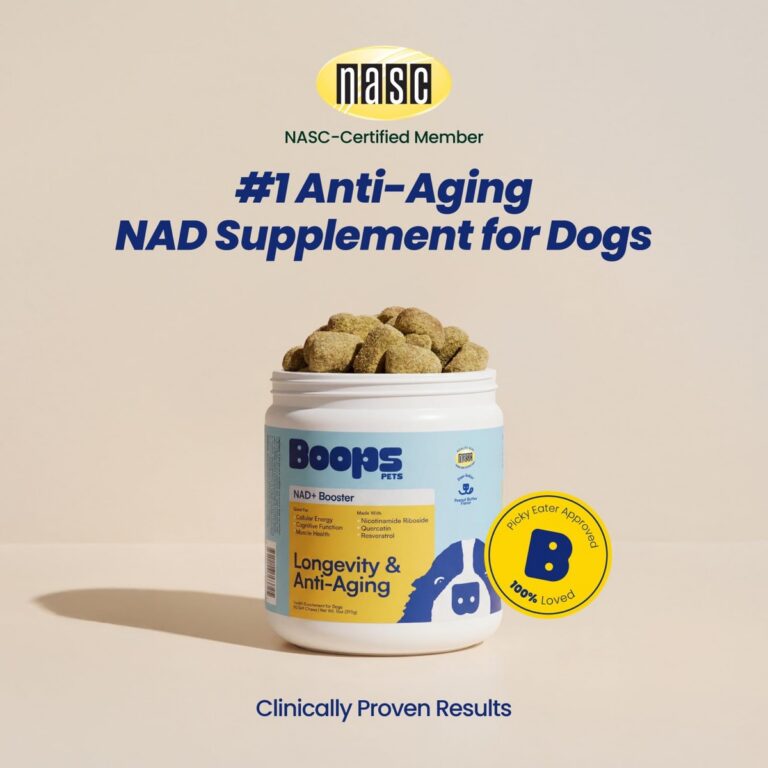
The phrase “clinically proven” appears on roughly 70% of dog supplement packaging we’ve catalogued over the past year. It also appears on human supplements, pet foods, and cleaning products. Its ubiquity is precisely the problem: when a term means everything, it communicates nothing. Yet federal regulators have not banned it. Why?
Because the law doesn’t regulate words; it regulates deception. And “clinically proven” sits in a gray zone between puffery and verifiable claim. Understanding where that line falls, and how enforcers draw it, is essential for any reporter, consumer, or veterinarian evaluating supplement advertising.
The FTC Substantiation Doctrine: What the Law Actually Requires
The Federal Trade Commission’s foundational framework for health advertising claims rests on the substantiation doctrine, codified in the FTC Act and elaborated through decades of enforcement actions. The core principle: advertisers must have a “reasonable basis” for objective claims before disseminating them.
Reasonable Basis Tiers
The FTC does not require a specific study type. Instead, it applies a sliding scale based on the claim’s nature:
- Establishment claims (“clinically proven to reduce plaque by 40%”) require competent and reliable scientific evidence, typically defined as randomized controlled trials in the relevant population.
- Structure/function claims (“supports immune health”) require competent and reliable scientific evidence, which may include a lower threshold depending on context.
- Puffery (“the best dog supplement ever”) is not actionable because no reasonable consumer relies on subjective superlatives.
The critical phrase is “competent and reliable scientific evidence.” The FTC’s Dietary Supplements: An Advertising Guide for Industry (1998, still operative) clarifies that this standard generally requires “tests, analyses, research, or studies that have been conducted and evaluated in an objective manner by persons qualified to do so, using procedures generally accepted in the profession to yield accurate and reliable results.”
What “Clinically Proven” Implies to a Reasonable Consumer
The NAD, in case decisions spanning the BBB National Programs archive, has consistently treated “clinically proven” as an establishment claim when paired with specific outcomes. When unpaired, it becomes ambiguous; ambiguity cuts in favor of the regulator when consumer interpretation is at issue.
NAD Case Records: Pattern Recognition from Self-Regulatory Decisions
The National Advertising Division (NAD), now part of BBB National Programs, adjudicates challenges to advertising claims without litigation. Its decisions are public and offer a window into how substantiation is evaluated in practice.
Common Substantiation Failures
Across NAD decisions in the pet supplement and adjacent health-product categories, recurring deficiencies include:
| Claim Type | Common Failure | NAD Outcome Pattern |
|---|---|---|
| “Clinically proven” (general) | No cited study; vague reference to “research” | Recommended discontinuance or modification |
| Specific percentage reduction | Study in different species or model | Modification required; claim narrowed |
| Ingredient-level claim | Evidence on different form (powder vs. final product) | Discontinuance or added disclosure |
| Mechanism claim (“works by…”) | Mechanism demonstrated but outcome not tested | Modification to supported language |
The table reflects editorial assessment of NAD decision patterns, not a statistical analysis. But the signal is consistent: claims that gesture toward evidence without providing accessible substantiation face higher challenge rates.
The Escalation Path: NAD to FTC to Litigation
When an advertiser refuses to comply with an NAD recommendation, the NAD can refer the matter to the FTC. FTC enforcement actions, in turn, can trigger consumer class actions. This escalation pathway matters because it creates a paper trail; reporters can trace enforcement signals by watching for NAD referrals in subsequent FTC complaints.
For a broader look at how marketing claims connect to ownership and incentive structures, our investigation into private-equity ownership effects on pet supplement quality documents related dynamics.
Three Tests for Evaluating Any “Clinically Proven” Claim
Below is a practical framework any reporter, veterinarian, or skeptical consumer can apply. None of these tests require legal training; they require reading the cited evidence critically.
Test 1: Population Match
Was the study conducted in dogs? In the life stage claimed (adult, senior, puppy)? In the condition targeted (e.g., dental plaque, gastrointestinal upset)? A human-cell-line study does not substantiate a canine oral-health claim, regardless of how impressive the in vitro results appear.
Test 2: Primary Endpoint Alignment
Does the study measure the specific outcome advertised? If a product claims “reduces anxiety,” but the cited study measured “serum cortisol reduction,” that is a mechanism claim, not an outcome claim. The two are not interchangeable in substantiation terms.
Test 3: Statistical Significance and Reporting
Does the cited research report p-values, confidence intervals, and effect sizes? A study showing a “trend toward improvement” that fails to reach statistical significance is not evidence of effect; it is evidence of insufficient power or absence of effect. The distinction matters for substantiation.
For additional context on how marketing logic distorts supplement evidence, see our analysis of the marketing logic behind the numbers.
The Ingredient-vs.-Product Problem
One of the most pervasive substantiation gaps in pet supplement advertising involves ingredient-level evidence extrapolated to finished-product claims. A manufacturer may cite a peer-reviewed study on Lactobacillus rhamnosus in dogs, then market a multi-ingredient chew containing that strain at a different dose and in a different matrix.
This practice sits in a legal gray zone. Technically, the ingredient is supported. But the FTC’s reasonable-basis standard asks whether the evidence matches the specific claim made about the specific product. An ingredient study does not necessarily substantiate a finished-product claim, particularly when formulation differences affect bioavailability, stability, or interaction effects.
How to Spot Ingredient-Level Extrapolation
- The cited study uses a different dose than the commercial product.
- The cited study uses a different delivery form (powder vs. chew).
- The cited study uses a single ingredient, but the product contains multiple actives.
- The cited study is in a different species or condition.
None of these automatically disqualify the claim, but each is a flag for closer examination. Reporters should request the full study citation, not just a footnote saying “clinical studies support…”
What This Means for Consumers and Reporters
The substantiation framework is not a trap; it’s a tool. When applied consistently, it separates marketing language from evidence-based claims. Three takeaways for practice:
First, “clinically proven” without a citation is a red flag, not a reassurance. Second, the absence of a citation is itself information; companies with strong substantiation typically cite it prominently. Third, self-regulatory records (NAD decisions) are publicly searchable and represent the best available window into how claims are evaluated outside of formal litigation.
For related coverage of how review-site economics complicate the evaluation process, see our reporting on how independent pet supplement rankings get monetized.
Frequently Asked Questions
Does the FDA regulate “clinically proven” claims on dog supplements?
No. The FDA regulates labeling and structure/function claims under DSHEA, but advertising (including “clinically proven”) falls primarily under FTC jurisdiction. The two agencies coordinate, but the substantiation doctrine is FTC-administered.
What is the difference between an NAD decision and an FTC enforcement action?
NAD decisions are self-regulatory and non-binding; advertisers can refuse to comply, though doing so typically triggers FTC referral. FTC enforcement actions are formal legal proceedings with potential civil penalties and consumer redress.
Can a company say “clinically proven” if it only has ingredient-level evidence?
Generally no, if the claim implies the finished product was tested. The FTC requires evidence to match the scope of the claim. Ingredient-level evidence may support ingredient claims, not product claims, absent additional bridging data.
Where can I search NAD case decisions to verify a claim?
The BBB National Programs archives are publicly available at bbbprograms.org. Search by company name, product category, or claim type. Decisions typically include the challenger, the advertiser’s response, and the NAD’s reasoning.
References
- U.S. Federal Trade Commission. Dietary Supplements: An Advertising Guide for Industry. 1998. https://www.ftc.gov/business-guidance/resources/dietary-supplements-advertising-guide-industry
- BBB National Programs. National Advertising Division (NAD) Case Archive. bbbprograms.org/programs/advertising-industry/nad
- U.S. Federal Trade Commission. FTC Policy Statement Regarding Advertising Substantiation. 1983. https://www.ftc.gov/public-statements/1983/03/ftc-policy-statement-regarding-advertising-substantiation
- Strompfová V, et al. Canine oral health postbiotic trial. Journal of Veterinary Dentistry. 2026. PMID: 40509062
- Schmitz SS, et al. Gut-skin axis intervention in dogs. Veterinary Dermatology. 2026. PMID: 40723482
Disclosure: This article may contain affiliate links. If you purchase through these links, we may earn a small commission at no extra cost to you. This does not affect our editorial independence.
This content is for informational purposes only and is not a substitute for professional veterinary advice. Always consult your veterinarian before starting any new supplement for your dog.