
Key Takeaways/Quick Read
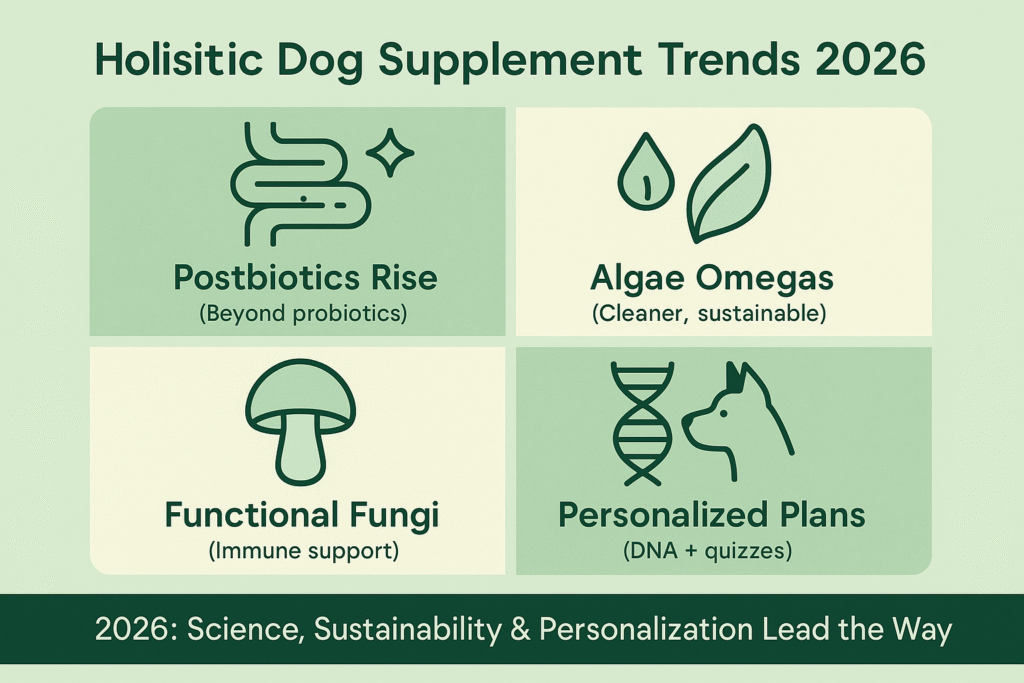
- Microbiome Mastery: The trend is shifting from basic probiotics to more stable and effective postbiotics to manage gut health and even anxiety.
- Sustainable Omegas: Eco-conscious pet parents are moving away from fish oil and choosing algae oil—a purer, more sustainable source of EPA and DHA.
- Functional Fungi: Medicinal mushrooms for dogs, like Reishi and Turkey Tail, are gaining traction as new science emerges to support their immune benefits.
- Hyper-Personalization: “One-size-fits-all” is over. The future is about personalized supplement plans based on DNA, quizzes, and fresh-food diets.
As dedicated pet parents, we no longer see our dogs as just pets, they are cherished family members. This “pet humanization” has completely reshaped the wellness industry, leading us to seek the same quality of care for them as we do for ourselves. As we look to 2026, the most significant holistic dog supplement trends are not just fads; they represent a fundamental shift toward more transparent, sustainable, and personalized care.
This new approach is driven by a “Values Trifecta” that modern pet parents demand: transparency in sourcing, sustainability in production, and personalization for their dog’s unique needs. Here are the top trends emerging from this new mindset.
Top Holistic Dog Supplement Trends
Trend 1: Why Is the Microbiome Revolution Moving Beyond Probiotics?
For years, probiotics have been the go-to for canine digestive health. However, 2026 is the year of the postbiotic.
Postbiotics are the beneficial compounds produced by live probiotic bacteria. Think of it this way: if prebiotics are the “fertilizer” and probiotics are the “seeds,” postbiotics are the “fruit” or “harvest.”
There are two key reasons for this shift:
- Stability: Probiotics are fragile live organisms that can easily die off due to heat, moisture, or air, meaning they may not be effective by the time your dog consumes them. Postbiotics are inanimate, making them perfectly stable in chews, toppers, and food.
- Effectiveness: Postbiotics deliver consistent, targeted benefits-like supporting the gut barrier and promoting a healthy immune response-without the variables of live cultures.
This trend also includes a focus on the “gut-brain axis,” using specific probiotic strains (like Bifidobacterium longum BL999) to help manage canine anxiety, further solidifying the gut as the center of holistic health.
Trend 2: Are Sustainable Omegas Replacing Fish Oil?
Omega-3s (EPA and DHA) are essential natural supplements for dogs, celebrated for supporting joint health, skin, and cognition. The traditional source, however, has been fish oil, which comes with two major problems:
- Sustainability: It contributes to overfishing and marine ecosystem depletion.
- Purity: Fish can accumulate heavy metals and toxins like mercury, which may end up in the final product.
The 2026 solution is algae oil. Fish don’t create EPA and DHA; they get it from eating algae. By going directly to the source, algae oil provides a purer, more potent, and 100% sustainable whole food dog supplements alternative. Unlike flaxseed (which only provides ALA that dogs convert inefficiently), algae oil delivers the biologically active EPA and DHA your dog needs directly.
Trend 3: What Does Science Say About Functional Fungi?
You’ve seen them in your own coffee or wellness blends, and now medicinal mushrooms for dogs are a major trend. Functional fungi like Reishi, Turkey Tail, and Lion’s Mane are being used as adaptogens to support the immune system, reduce stress, and promote cognitive health.
This trend balances three perspectives:
- Traditional Use: Holistic vets have used herbal remedies for dogs, including mushrooms, for centuries.
- Veterinary Caution: Mainstream vets warn that “natural” doesn’t always mean safe, and mushrooms can interact with medications.
- Emerging Science: This is the game-changer. New canine-specific studies are beginning to validate these benefits. For example, a 2024 study on Reishi mushrooms (Ganoderma lucidum) found that supplemented dogs showed a significantly stronger immune response to their rabies vaccine.
Always consult your vet before adding mushrooms, but expect to see more science-backed formulas.
Trend 4: How Is Hyper-Personalization Changing Supplement Routines?
The era of giving every dog the same generic multivitamin is ending. The future is about “precision nutrition” tailored to your dog’s individual biology.
This hyper-personalization trend is appearing in several ways:
- DTC Quizzes: Brands are using “pet quizzes” to recommend a specific stack of supplements for your dog’s unique issues (e.g., “itchy skin” + “picky eater”).
- DNA-Informed Plans: At-home DNA tests that report on health predispositions are being linked directly to supplement recommendations.
- Fresh & Homemade Diets: As more parents turn to vet-formulated homemade diets, there is a critical need for “balancer” supplements to ensure the food is nutritionally complete.
These integrative vet supplements are designed to fill the specific nutritional gaps in your dog’s diet, not just add “more” of everything.
| The Old Way (2020) | The 2026 Holistic Trend |
| Basic Probiotics | Stable & Targeted Postbiotics |
| Fish Oil | Sustainable & Pure Algae Oil |
| Generic Multivitamins | Personalized Plans (from DNA/Quizzes) |
| Anecdotal Herbs | Clinically-Studied Botanicals (Fungi, etc.) |
How to Choose Safe and Effective Natural Supplements for Dogs
As this market grows, it’s critical to be a savvy consumer. The FDA does not regulate pet supplements for safety or efficacy before they are sold.
A “holistic” or “natural” label means nothing without proof. The most important thing you can do is look for the NASC Quality Seal on the product. This seal from the National Animal Supplement Council (NASC) ensures the manufacturer has passed a rigorous third-party audit for quality control, ingredient verification, and manufacturing standards.
Before giving any new supplement, always talk to your veterinarian to ensure it’s the right choice for your dog’s specific health needs.
The Future of Holistic Dog Supplement Trends
The future of pet wellness is intelligent, ethical, and individual. The holistic dog supplement trends of 2026 show a clear move away from guesswork and toward science-backed, sustainable, and personalized solutions. By focusing on core drivers like gut health and sustainable sourcing, we can help our dogs live healthier, happier lives.
Frequently Asked Questions About Holistic Dog Supplements
1. What are postbiotics for dogs?
Postbiotics are the beneficial compounds (like short-chain fatty acids) produced by live probiotic bacteria. They are very stable and effective for supporting a dog’s gut and immune health.
2. Is algae oil better than fish oil for dogs?
Algae oil is a more sustainable and purer source of EPA and DHA than fish oil, which carries risks of overfishing and heavy metal contamination. Both provide Omega-3s.
3. What are medicinal mushrooms for dogs used for?
Holistic vets use medicinal mushrooms like Reishi and Turkey Tail primarily for immune system support and as natural adaptogens to help the body manage stress.
4. Is CBD for dogs considered a holistic supplement?
Yes, CBD is a popular holistic supplement used to support joint health, manage stress, and promote calmness. Always choose a product with third-party testing and no THC.
5. What about ayurvedic supplements for dogs or flower essences for dogs?
These are part of traditional holistic care. Ayurvedic herbs like Ashwagandha and flower essences for dogs like Bach’s Rescue Remedy are used to support energy balance and emotional well-being.