

Key Takeaways
- Vets Say No: Veterinarians strongly advise against giving dogs human-grade fish oil. The risks far outweigh any potential benefits.
- Hidden Dangers: Human supplements can contain ingredients like xylitol, which is extremely toxic and potentially fatal to dogs.
- Dosage is the Problem: Human-grade pills have widely variable concentrations of active ingredients (EPA and DHA), making a safe human fish oil for dogs dosage nearly impossible to calculate and risking a dangerous overdose.
- The Safe Solution: Always use a fish oil supplement specifically formulated for dogs and prescribed by your veterinarian, who can calculate the correct dose for your dog’s specific health needs.
Every dog owner who cares about their pet wants to provide the best possible care for their dog. People who understand the established health advantages of fish oil supplements for humans tend to wonder if they can provide this supplement to their dogs.
The veterinary community maintains a strict prohibition against to give my dog human fish oil supplements. The practice of sharing dog supplements appears budget-friendly but it creates major health risks which could result in severe medical issues or fatal outcomes.
The article explains why veterinarians advise against using human fish oil for dogs and explains the risks of incorrect dosage and presents alternative safe and effective solutions.
Why Is Human Fish Oil Dangerous for Dogs?
Human fish oil products present two major dangers when administered to dogs because they were not designed for canine metabolism.
The Hidden Danger: Toxic Additives
Human supplements containing flavored liquids and gummies and chewables use sweeteners to enhance their taste. Xylitol serves as a human-safe ingredient but it becomes deadly for dogs when consumed. Dogs experience immediate severe hypoglycemia after ingesting small amounts of xylitol because their bodies release excessive insulin which results in seizures and liver failure and death. All supplement labels should be checked but it is best to stay away from any products that contain these substances.
The High Risk of Accidental Overdose
The main danger for dog owners who want to give their pets supplements stems from incorrect medication amounts.
The standard fish oil capsule contains 1000mg but owners mistakenly believe this amount represents the correct dosage.
The therapeutic effects of fish oil supplements stem from their two essential components which are eicosapentaenoic acid (EPA) and docosahexaenoic acid (DHA).
- A typical human fish oil supplement containing 1000mg might only provide 300mg of EPA and DHA combined.
- The EPA and DHA content in “triple strength” 1000mg fish oil pills exceeds 900mg.
Using a triple-strength fish oil pill for dogs will result in three times the recommended dosage when following standard pill instructions. The process of determining proper human fish oil for dogs dosage for dogs becomes a dangerous process of trial and error.
What Are the Side Effects of Too Much Fish Oil in Dogs?
The administration of excessive fish oil amounts to dogs results in various fish oil for dogs side effects.
Mild Side Effects:
- Vomiting and diarrhea
- Lethargy
- Greasy and oily stools
- Fishy breath and skin odor
Serious Side Effects:
- Pancreatitis: Fish oil consists of pure fat which can cause pancreatitis when dogs receive excessive amounts. The condition leads to severe pancreas inflammation which affects breeds that have a predisposition to this condition.
- Blood Clotting Issues: The natural blood thinner properties of fish oil function as an anticoagulant. High fish oil consumption leads to blood clotting problems which result in delayed wound healing and abnormal bleeding. The combination of fish oil with NSAID pain relievers (Rimadyl) and anti-clotting medications creates an increased risk of bleeding complications.
How Do Vets Calculate the Correct Omega-3 Dosage for Dogs?
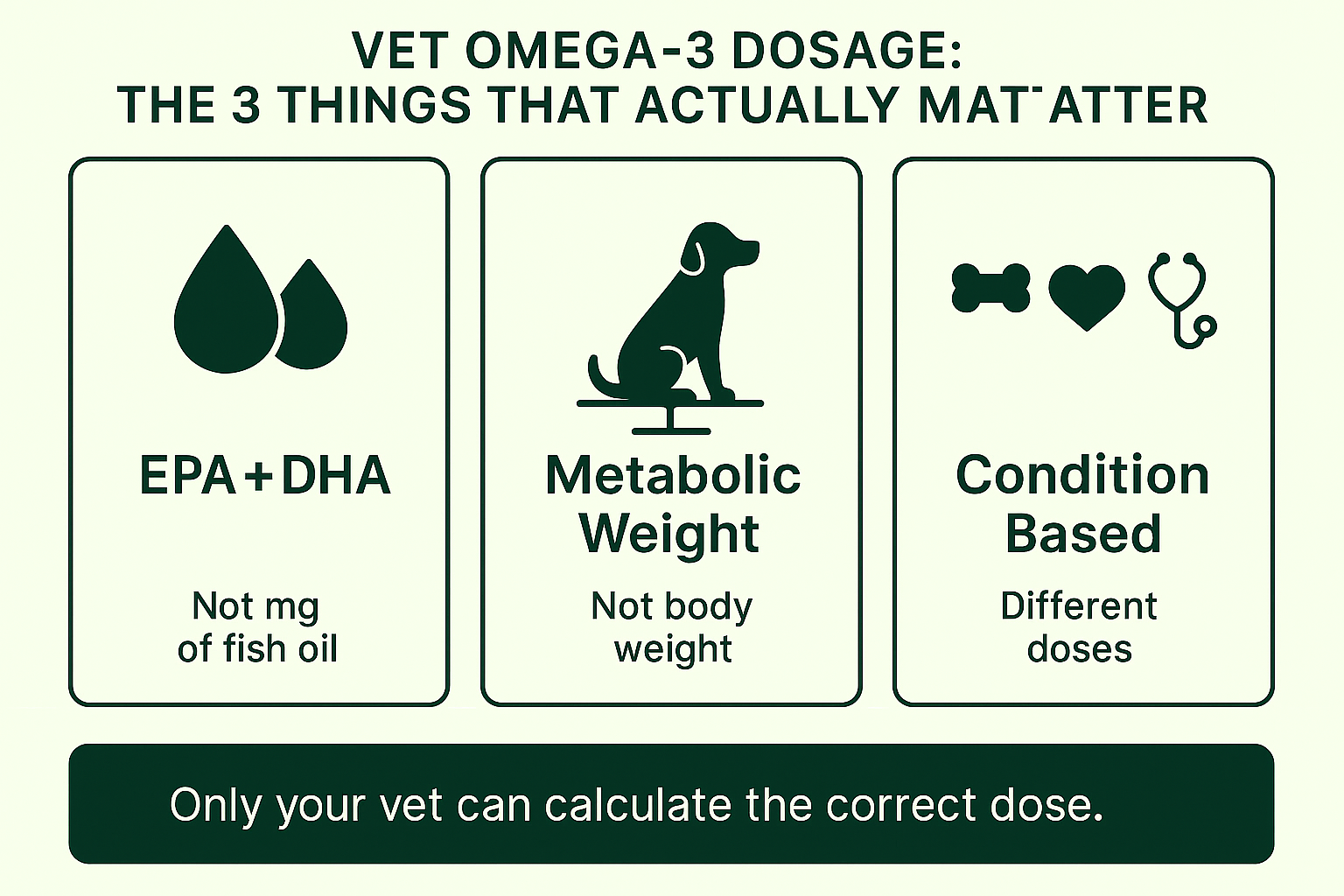
Veterinarians establish dog omega 3 dosage for dogs through calculations based on EPA and DHA milligram amounts.
Veterinarians base their fish oil dosing on the combined EPA and DHA for dogs milligrams which make up the active ingredients for dogs.
The recommended omega-3 dosage for dogs depends on individual factors rather than following a standardized amount. The veterinarian will establish the exact dosage amount through calculations that consider three essential factors.
- The veterinarian uses a dog’s metabolic body weight for chronic condition treatment instead of their actual weight for weight-based calculations.
- The recommended EPA/DHA dosage for osteoarthritis treatment exceeds the amounts used for heart and kidney disease management. The use of inappropriate dosages for specific medical conditions leads to both ineffective treatment and potential harm to the patient.
- Your veterinarian needs to perform a diagnosis before establishing the appropriate therapeutic dosage for your dog.
What’s the Best Human Fish Oil Brand for Dogs?
There exists no recommended best human fish oil brand for dogs which veterinarians endorse for canine use. The wide range of potential dangers makes it unsafe to select any human fish oil product for dog use.
Veterinarians suggest using products which have been developed for canine consumption. The popular Nordic Naturals fish oil for dogs stands out because it contains only pet-friendly ingredients with simple usage guidelines and no harmful additives.
What Are Safer, Vet-Approved Alternatives?
The NASC quality seal on Omega-3 supplements indicates that manufacturers follow strict standards for production.
The development of new scientific methods has introduced three alternative Omega-3 products which provide better sustainability and improved absorption rates and reduced stomach discomfort:
- Krill Oil: The Omega-3 compounds in krill oil exist in a structure which enables better absorption and produces less stomach discomfort.
- Green-Lipped Mussel (GLM): The “superfood” for joint health contains EPA and DHA and ETA which serves as a powerful anti-inflammatory compound.
- Algae Oil: The first natural source of Omega-3s exists in this product. Fish obtain their Omega-3 content from consuming algae as their primary food source. Dogs who have allergies can safely take algae oil because it provides a pure and sustainable fish-free solution.
Your Vet Has the Final Say
A vet must provide the correct human fish oil dosage for dogs because using human fish oil without vet approval creates dangerous health risks. The combination of toxic xylitol and unpredictable concentration levels and pancreatitis risk makes human fish oil unsafe for dogs.
All supplement use requires veterinary approval before beginning treatment. Your veterinarian will perform a diagnosis to determine your dog’s requirements and check for potential risks before selecting a specific supplement dosage that ensures both safety and effectiveness for your pet.
Frequently Asked Questions (FAQ)
1. Can I give my dog human fish oil?
No. Vets advise against it due to risks like toxic additives (xylitol) and the high danger of overdose from variable EPA/DHA concentrations in human-grade pills.
2. How much fish oil for dogs is safe?
A safe dose depends on your dog’s weight, breed, and specific health condition. It must be calculated by a vet based on combined EPA/DHA milligrams.
3. What are the side effects of fish oil for dogs?
The most common side effects are GI upset, diarrhea, and a “fishy” odor. Serious overdose can trigger pancreatitis or cause blood clotting problems.
4. What is the right omega 3 dosage for dogs?
The correct omega 3 dosage for dogs is based on the combined mg of EPA and DHA, not the total fish oil. This dose varies by condition (e.g., arthritis vs. kidney disease).
5. Are human supplements dangerous for dogs?
Yes, many human supplements are dangerous. They are not formulated for a dog’s metabolism and can contain ingredients like xylitol, which is extremely toxic to dogs.