
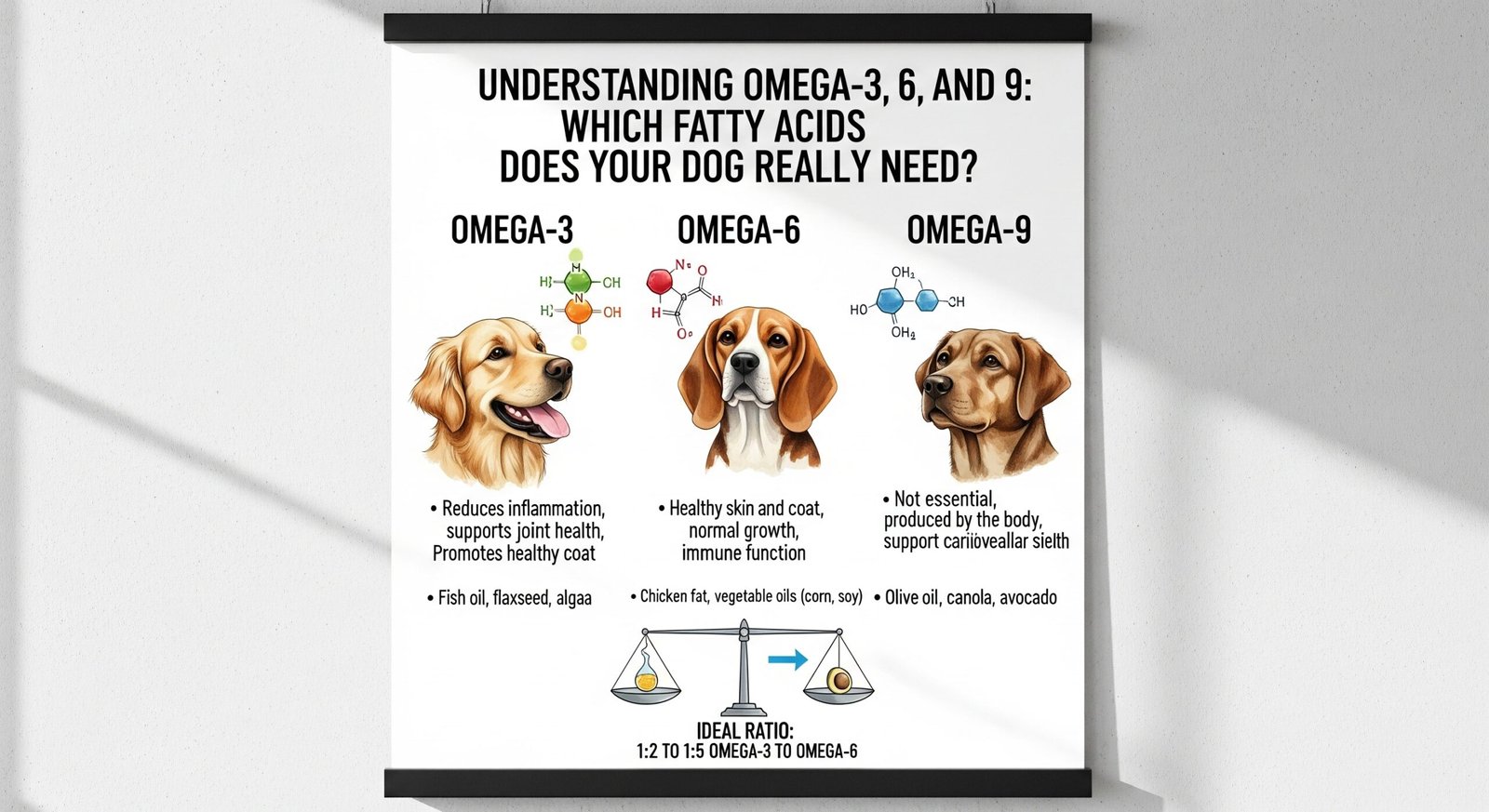
Key Takeaway: Dogs require a balanced supply of essential polyunsaturated fatty acids (PUFAs)—specifically the omega-3 and omega-6 families—to support skin and coat health, immune and inflammatory regulation, and cardiovascular function. Omega-9 fatty acids, while non-essential, can confer additional benefits when included in moderation. Optimal canine health is associated with an omega-6:omega-3 dietary ratio below 10:1, with specific dosages of EPA and DHA recommended to achieve anti-inflammatory effects.
1. Classification and Essentiality
- Omega-3 (n-3) PUFAs: Alpha-linolenic acid (ALA), eicosapentaenoic acid (EPA), docosahexaenoic acid (DHA).
- Omega-6 (n-6) PUFAs: Linoleic acid (LA), arachidonic acid (AA), gamma-linolenic acid (GLA).
- Omega-9 (n-9) MUFAs: Oleic acid and related monounsaturated fats—non-essential because dogs can synthesize them.
Dogs cannot synthesize LA and ALA, making them essential. EPA and DHA are conditionally essential, as canine conversion of ALA to long-chain n-3 PUFAs is inefficient.
2. Omega-3 Fatty Acids
2.1 Physiological Roles
- Anti-inflammatory: EPA/DHA compete with AA for eicosanoid synthesis, reducing pro-inflammatory mediators.
- Joint health: Improves osteoarthritis pain scores and quality of life.
- Cardiovascular: Lowers triglycerides and LDL; supports endothelial function.
- Neurological: Critical for cognitive development and function.
2.2 Dosage and Outcomes
NRC Recommendations:
- Maintenance: ≥ 30 mg EPA + DHA per kg body weight per day
- Therapeutic: up to 370 mg/kg/day.
Clinical Evidence:
- 68 mg EPA + DHA/kg/day for 16 weeks doubled canine Omega-3 Index (O3I) from 1.4% to 3.3%, reducing pain scores by ~30–38% in small and medium dogs.
- Fish oil–enriched diets lowered total cholesterol and LDL, improved omega-3 tissue incorporation, and decreased omega-6:omega-3 ratio from 15.6:1 to 1.7:1 in plasma phospholipids.
3. Omega-6 Fatty Acids
3.1 Physiological Roles
- Structural: LA and AA maintain cellular membrane integrity.
- Skin and coat: LA is critical for epidermal barrier function.
- Immune response: Precursors to both pro- and anti-inflammatory eicosanoids.
3.2 Optimal Ratios
- AAFCO/NRC Standards: Max dietary omega-6:omega-3 ratio ≤ 30:1 (AAFCO) and < 26:1 (NRC).
- Research-Backed Target: Ratios between 5:1 and 10:1 lower inflammatory markers and increase anti-inflammatory mediators in dogs.
Clinical Note: Diets with omega-6:omega-3 > 24:1 foster pro-inflammatory states; ratios < 10:1 are associated with improved skin health and reduced eicosanoid-mediated inflammation.
4. Omega-9 Fatty Acids
4.1 Physiological Roles
- Energy source: Oleic acid is a high-calorie MUFA supporting active metabolism.
- Cardiovascular: May lower LDL and triglycerides; improve HDL ratios.
- Skin and wound healing: Anti-inflammatory properties support dermatologic health.
4.2 Dietary Considerations
As non-essential, omega-9s need not be added if total fat intake is adequate; however, sources like olive oil can enhance MUFA content, aiding in coat luster and cardiovascular support when included at moderate levels.
5. Practical Feeding Recommendations
| Fatty Acid Family | Key Members | Role | Canine Requirement |
|---|---|---|---|
| Omega-3 | EPA, DHA, ALA | Anti-inflammatory, joint, CV | ≥ 30 mg EPA + DHA/kg BW/day; therapeutic up to 370 mg/kg/day |
| Omega-6 | LA, AA, GLA | Skin, membranes, eicosanoids | Essential; maintain dietary n-6:n-3 ratio 5–10:1 |
| Omega-9 | Oleic acid | Energy, MUFA, anti-inflammatory | Non-essential; moderate inclusion from quality oils |
Supplementation Strategy:
- Baseline diet with balanced omega-6 and omega-3 sources (e.g., fish oil, flaxseed, chicken fat).
- Therapeutic supplementation of EPA/DHA for osteoarthritis or inflammatory conditions at ≥ 100 mg/kg/day.
- Maintain omega-6:omega-3 ratio < 10:1 to optimize anti-inflammatory effects.
- Use olive or avocado oil sparingly for added omega-9 benefits without displacing essential fats.
Conclusion
Optimal canine fatty-acid nutrition hinges on supplying essential omega-3 and omega-6 PUFAs in proper ratios and dosages, with omega-9 MUFAs serving as beneficial adjuncts. Adhering to evidence-based guidelines maximizes joint, skin, and cardiovascular health in dogs.